On Doug Pederson, The Eagles Front Office, And The Quarterback, Part 2

http://www.gettyimages.com/detail/news-photo/owner-jeffrey-lurie-of-the-philadelphia-eagles-and-general-news-photo/181684638

Patrick Causey, on Twitter @pcausey3

Bill Belichick and Tom Brady.

Bill Polian, Tony Dungy, and Peyton Manning.

John McVay, Bill Walsh and George Seifert, and Joe Montana and Steve Young.

Kevin Colbert, Bill Cowher and Mike Tomlin, and Big Ben.

The history of the NFL is replete with examples of Super Bowl winners having a strong general manager, a great head coach, and a franchise caliber quarterback.

The Eagles currently have Howie Roseman, Doug Pederson, and Sam Bradford.

Is this triumvirate good enough to finally end the Super Bowl drought that has plagued this city’s loyal fan base for over 60 years? In order to answer that question, I wanted to analyze each position — head coach, front office and quarterback — in a three-part series.

As I mentioned in Part 1 (which you can read here), it is too early — and indeed, impossible — to judge how Pederson will turn out. But we have enough information from which to draw reasonable conclusions on Howie Roseman (Part 2) and Sam Bradford (Part 3).

Digging deep into the Eagles front office leaves an indelible impression that you are watching an episode of “NovaCare 90210“: politicking and in-fighting begetting backstabbing and constant turnover.

A lot of the finger pointing has been aimed at de facto general manager Howie Roseman. And as we will see in a moment, some of it is justified. But by focusing all of our efforts on Roseman, we run the risk of ignoring the fact that Jeffrey Lurie is just as, if not more, responsible for the mess facing this Eagles franchise.

It Starts With Jeffrey Lurie

http://www.gettyimages.com/detail/news-photo/jeffrey-lurie-owner-of-the-philadelphia-eagles-stands-on-news-photo/181228120

To be fair, it isn’t all doom and gloom.  Per Pro-Football-Reference.com, the Eagles have enjoyed their best run in franchise history under Lurie with a record of 186-148, a 55% win percentage that considerably bests the Eagles franchise record prior to Lurie’s arrival of 362-434 (45%). During his 21 years as owner, the Eagles have made the playoffs 12 times, played in 5 conference championships, 1 Super Bowl, and as Brent pointed out last week, have 12 seasons of at least 10+ wins, and only 6 seasons of below .500 football.

The level of consistency that Lurie has achieved is not easy in a league that is designed to manufacture parity.

But if we peel back the layers of this onion a little more, we see a clear delineation point between when the Eagles were close to the gold standard that Lurie espoused over a decade ago, to now, where they more closely resemble a model of mediocrity.

From 2000 until 2004, the Eagles were an impressive 59-21, a .737 win percentage. But for the next decade, from 2005 until 2015, the Eagles have amassed a 93-82 record, a .531 win percentage

What happened? What caused the decline? For starters, the team’s prime players of Donovan McNabb, Brian Westbrook, Brian Dawkins, et al, started to age, and the Eagles front office did a terrible job of finding replacements vis-a-vis the draft. That forced their hand to seek to fill holes via free agency, which, as we saw this season, is rarely a successful strategy.

All of this was occurring with a backdrop of constant turmoil and power struggles in the front office, as detailed by Les Bowen of Philly.com said earlier this week:

I’ve covered the Eagles since 2002 and what I recall is intrigue and turmoil, pretty much consistently. Reid pushed out Tom Modrak. Tom Heckert was Reid’s guy; when Heckert left, Joe Banner maneuvered into a greater personnel role, and arranged one for his protégé, Roseman. Roseman pushed aside Jason Licht, now general manager of the Bucs, after Licht privately disparaged Roseman’s “football guy” credentials, people close to the situation have said. Eventually, Banner was cast aside in favor of Roseman.”

In other words, these issues precede Howie Roseman, which is why it isn’t fair to completely blame him for the current state of affairs. The one constant through it all is the owner. Lurie has tolerated these types of power struggles for at least the last 15 years, which has led to a constant turnover that you do not see in the best NFL franchises.

Consider this:

Kevin Colbert has been in charge of the player personnel department for the Pittsburgh Steelers, as the director of football operations and then general manager, since 2000. During that time he has worked with only two head coaches, Bill Cowher and Mike Tomlin, winning Super Bowls with each.

Bill Belichick has served as the the head coach and general manager of the New England Patriots since 2000, winning four Super Bowls.

The New York Giants have had three general managers since 1979: George Young (79-97), Ernie Accorsi (98-06) and Jerry Reese (07-Present). During that time, they have had Hall of Fame coaches Bill Parcels and Tom Coughlin, and have won four Super Bowls.

The Green Bay Packers have had only three general manager type figures since 1992, and four head coaches during that time period (three if you don’t count the one year tenure of former Eagles head coach Ray Rhodes). They won two Super Bowls.

Ozzie Newsome has been the general manager of the Baltimore Ravens for 20 years, the only person to hold that position since Art Modell moved the team from Cleveland to Baltimore. He’s had three coaches during that time period, with the latter two, Brian Bilick and John Harbaugh, each lasting 8 seasons (and counting for Harbaugh) and each bringing home a Super Bowl trophy.

Since 1997, those five franchises account for 12 of the 19 Super Bowls.

Obviously talent goes a long way towards bringing in those championships. But we would be foolish to ignore that the best franchises all follow the same blueprint, a blueprint which is predicated on a foundation of patience, continuity, and playing the long game.

Under Lurie, the Eagles have never quite been able to get it right. Sure, Andy Reid coached here for 14 years, and for that, Lurie deserves credit. But the other three coaches under Lurie — Rich Kotite, Ray Rhodes, and Chip Kelly — lasted an average of 2.66 seasons.

And Lurie has cycled through front office executives like they are going out of style: from Modrak, to Heckert, to Reid, to Banner, to Roseman, to Kelly and now, back to Roseman, there has been a revolving door of executives that is robbing the Eagles of the continuity and consistency that it needs to compete with the best franchises in the NFL.

That is why any discussion about the problems at One NovaCare Way must start and end with Jeffrey Lurie. Until he is able to forge a front office that spends more time working together than they do looking out for their own self interest, the Eagles will continue to struggle on the field.

Roseman Has Made The Situation Worse

http://www.gettyimages.com/detail/news-photo/howie-roseman-evp-of-football-operations-for-the-news-photo/496475230

When evaluating Howie Roseman as a general manager, it’s important to separate the two discernible roles that the carries: talent evaluation/acquisition and fostering a productive environment in the front office.

The former category yields a mixed bag of results. Rosman is a smart guy that has a reputation for being an incredibly hard worker. He understands value better than most, and has proved especially adept at pulling off trades. He is analytically inclined, something the NFL needs more of, and has good discipline when it comes to managing the salary cap. In those senses, he seems to be the polar opposite of Chip Kelly.

Those positives attributes have undoubtedly played a part in drafting Fletcher Cox, Bennie Logan, Lane Johnson, Zach Ertz, Jordan Matthews, and Mychal Kendricks, trading for Darren Sproles and DeMeco Ryans, and signing Connor Barwin and Malcolm Jenkins. Good moves by any measure.

But his tenure as general manager has also produced first round busts Danny Watkins and Marcus Smith, second round busts in Nate Allen and Jaiquawn Jarrett, and free agent busts Nnamdi Asomugha, DRC, Vince Young, and Ronnie Brown.

In other words, some good, some bad.

But it is that second category that is hard to ignore. Roseman has a history of butting heads with many people inside the Eagles organization, a fact he acknowledged yesterday following the press conference to introduce Doug Pederson.

This issue has led to multiple reports that paint Roseman in an extremely negative light.  And while each of these reports can be explained away in isolation, it is the aggregate that makes it impossible to ignore:

  • Jason La Confora’s report in 2013 when the Eagles head coaching search hit a standstill, which stated “I wish I had a dollar for every time someone told me one esteemed coach or another advised one of the Eagles’ top candidates not to take the job precisely because of Roseman’s presence there…The rumblings about Roseman lacking nuance and foresight, about him turning people off with how drunk with power he’s become, only grow louder as his coaching search grows stranger.”
  • Geoff Mosher, one of the best Eagles reporters in the game, has published at least three reports on the problems that Roseman has created in the Eagles front office. The first came in 2014, which pinned the Gamble firing on Roseman and alluded to a growing tension between Roseman and Marynowitz: “…bad blood in Roseman’s scouting department has been brewing and Gamble’s departure could be just the first shoe to drop. Assistant director of player personnel Ed Marynowitz has also butted heads with Roseman, the sources said.”
  • In 2015, Mosher followed up that report with a more in-depth look into what it was like to work with Roseman: “working with Roseman can be unbearable, especially in times of adversity. Roseman was so driven by fear of failure that he didn’t stick to the process and quickly turned on his staff when problems arose. Roseman was also distrustful of his staff, fearing that underlings would try to climb the ladder and snatch away his job the same way he did as he worked his way up the chain for 16 years. His paranoia either drove other talented executives away or landed them pink slips. That’s why guys like Jason Licht, Marc Ross, Tom Heckert, Louis Riddick, Tom Gamble and others had short careers with the Eagles as Roseman worked his way up. “He’s not a leader,” one person who worked under Roseman said. “He’s an authority figure.
  • Another report from Goeff Mosher on the problem in the Eagles front officeAccording to multiple personnel men who have worked under Lurie and Roseman, the team’s unconventional front office structure has enabled management turmoil to prevail year after year despite the rash of changes around Lurie and Roseman. The root of the problem is the flow of information from Roseman to Lurie, which is spun exactly the way Roseman wants it. So although Lurie is known to take “voluminous notes” about the goings-on in personnel matters surrounding his franchise, he’s essentially scribbling down the lecture coming from Roseman’s podium. “A toxic environment,” as one former Eagles personnel executive deemed it. Lurie trusts Roseman blindly and implicitly, which is the only reason to explain why he’s sat back and allowed several well-regarded football men to become fall guys when the Eagles didn’t win or made bad draft picks. Someone always pays the price — Marc Ross, Lou Riddick, Jason Licht — and now Gamble. Someone other than Roseman, of course.”
  • Louis Riddick has repeatedly ripped Roseman and the toxic front office he’s created. When Roseman was first demoted, Riddick had this to say: “And the people who shouldn’t be doing what they are doing are no longer doing it. I mean Tom Gamble, Jason Licht, I’m gonna throw myself in there… these are some quality football person. Some football people who really know what they’re doing. People who know the game, who have strong personalities. Let’s just say they went into Philadelphia one way and left there another way.”
  • When Kelly was fired in 2016, Riddick questioned why everyone but Roseman was held accountable: “I have no idea [why Roseman is still there]. Everyone else has been removed Everyone else has been held accountable except him.
  • Mark Eckel of NJ.com reported that Roseman had a hand in Kelly and Marynowitz being fired: “Howie has been poisoning Ed,” one person with knowledge of the infighting said. “And he has his people doing the same.” According to several league sources, the firings have Roseman’s fingerprints all over it. “I can’t believe it,” a long-time executive for an Eagles rival said when told of Kelly’s firing. “They did what? Are you serious? No, you’re kidding right? You can’t be serious.” When he finally realized it wasn’t a joke, he put the onus on the former and probably future general manager. “Howie got him,” the executive said. “He won. It took him some time, but he got to the owner, and he won. That’s just amazing. What is Lurie thinking? That place is just out of control.
  • Rueben Frank of CSNPhilly.com reported back in 2014 that Jeffrey Lurie thinks Howie Roseman is a messiah that can do no wrong‘But Lurie is fiercely loyal to Roseman, who’s risen through the organization from intern to GM and has been here since 2000. Lurie even kept Roseman over his boyhood friend, team president Joe Banner, when Roseman and Banner were locked in a power struggle a few years ago. “Jeffrey sees Howie as a messiah,” a one-time Eagles front-office exec said Wednesday. “Howie can do no wrong in his eyes.”‘ Frank went on to point out how a number of Eagles executives such as Tom Heckert, Jason Licht, Ryan Grigson (who accepted the Colts‘ GM job), Louis Riddick, and now Gamble have all been removed over the years while Roseman still remains.
  • A week ago, Frank cited another league source acknowledging Roseman is the problem: “Everybody knows Howie is holding back the organization,” an NFL front-office executive said earlier this week. “Everybody but one person. And that person is the only one who matters. Jeffrey Lurie. He just doesn’t see it.”
  • Just on Monday, Peter King, of SI.com, reported that one of the reasons that Tom Coughlin turned the Eagles down because he “wasn’t sure how his working relationship with Eagles football czar Howie Roseman would go.”
  • And during the confusing coaching search, Les Bowen and Jeff McLane insinuated that the Eagles did not interview Sean McDermott because of a personnel dispute he had with Roseman back in 2010.

Again, some of these reports should be taken with a grain of salt. La Confora reported that Roseman prevented the Eagles from hiring a coach, yet a few weeks later the Eagles landed their top target in Chip Kelly. Louis Riddick reportedly lost out on the General Manager position to Roseman in 2010, so it is not a stretch to imagine that some bad blood exists between the two.

But that’s still 11 reports from 8 writers, some of whom cited multiple sources. At some point, we have to accept that where there is smoke, their is fire. And that fire was all but confirmed yesterday when Roseman had to say this:

And this:

And this:

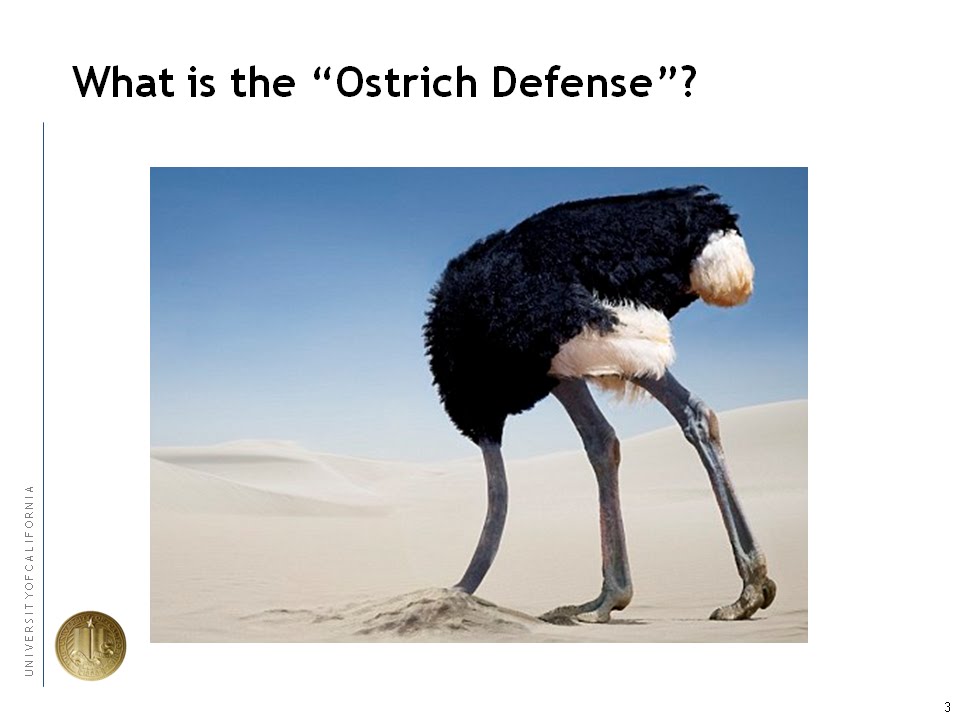
Again, caveats apply, and it would be extremely unfair to pin the Eagles mediocrity entirely on Roseman. But we cannot absolve him of blame either. While the rest of the league, and most of the fan base, has recognized these issues, Lurie seemingly has applied  the ostrich defense so far:
maxresdefault

It Can Still Be Turned Around

The good news is that this can all be turned around. I’d be lying if I said I wasn’t skeptical. These issues have persisted so long that they seem systemic. But, failure has a funny way of humbling people. So maybe Roseman did self-reflect and grow this last year. And while the coaching search certainly left a bad taste in my mouth, perhaps hiring Pederson, who is described as a laid back guy, might be the perfect yin to Howie Roseman’s yang. If the Eagles can finally find the right mix, focus on building through the draft, and finding a franchise caliber quarterback, this thing can turn around quickly.

If not, perhaps Lurie will finally do what many thought he should have done this offseason: clean house and start over.
On Doug Pederson, The Eagles Front Office, And The Quarterback Part 1

http://www.gettyimages.com/detail/news-photo/offensive-coordinator-doug-pederson-of-the-kansas-city-news-photo/460828028

Scouting the Eagles new coach and why it would be foolish to dismiss Doug Pederson’s tenure before it even starts.

Patrick Causey, on Twitter @pcausey3

The wait — or torment, depending on your patience level — is finally over. The Philadelphia Eagles have hired Kansas City Chiefs’ offensive coordinator Doug Pederson to be their next head coach. With the hire, Jeffrey Lurie seems to be reaching back in time trying to rekindle the magic he established when he hired Andy Reid, another relatively obscure offensive mind with no play calling experience.

Despite what you may hear on the radio or read on ESPN, we legitimately have no idea whether Doug Pederson will be a good head coach. That’s because there are so many unknown variables right now: can Pederson perform the necessary duties required of him as a head coach? Who will be Pederson’s assistants? Will the Eagles get back to building through the drat and supplementing through free agency? And can the Eagles front office finally– finally — coexist long enough to attain the stability that this franchise has never achieved with Jeffrey Lurie as the owner?

(Author’s note: this post focuses exclusively on Doug Pederson. I will address the Eagles front office in a post later this week).

We Have No Idea How This Hire Will Turn Out

The only concrete conclusion that we can reach about Doug Pederson is that we have no idea how he will turn out as a coach. Anyone suggesting otherwise is peddling a false narrative based on their own preconceived notions.

One such narrative is that Pederson cannot be a quality coach because he was their third or fourth option. Missing out on their top choices certainly makes the Eagles front office look bad. But it’s worth pointing out that whether you hire your first or fourth choice in a coaching search has almost no predictive value on whether that head coach is good.

Bill Cowher was the eighth of nine coaches hired back in 1992, and that worked out fine for the Steelers. Chip Kelly was the Eagles primary target in 2013, and he lasted only three seasons without ever winning a playoff game. Rob Chudzinski was the Browns fallback option after they missed out on Kelly, and he went 4-12 in his only season as a head coach. Bruce Arians was passed over by almost everyone in 2013 — including the Eagles — and he is one win away from playing in the Super Bowl.

The point is simple: picking a head coach is hard, and history is littered with trendy coaches and fall back options that succeed and fail miserably. So we shouldn’t put any stock in where Pederson ranked in the pecking order of hot commodities.

By all accounts, Pederson has a good reputation. Andy Reid speaks very highly of him, something that should carry weight in Philadelphia given his track record as a head coach. And those that have interacted with Pederson have glowing things to say:

But beyond that, we are at a huge information disadvantage here. We don’t know anything first hand about Pederson. We weren’t privy to the interviews. We don’t know whether he can command the respect of a locker room. We don’t know if he can formulate a gameplan designed to take advantage of another team’s limitations. We don’t know how he will do with in-game adjustments. How he will react when the proverbial shit hits the fan (and it always does). Or whether he can connect with his players in a way that’s conducive to building a winning culture.

We don’t know. We don’t know. We. Don’t. Know.

So the best that we can do is give Pederson time. I don’t mean to sound like a Hallmark card here, but we need to let him fail, let him learn, and let him grow. If we take our legitimate frustrations with the Eagles front office and ownership out on Pederson, we are setting him up for failure. Then, we would be looking for our fourth coach in short order, placing us squarely in Cleveland Browns territory, folks.

Hiring A Great Staff Is Critical

The best thing Eagles can do is surround Pederson with a talented staff. A head coach cannot do it all. The coordinators usually help formulate game plans. The position coaches spend the majority of time with the players at their respective positions and are charged with helping them improve their technique and work on their limitations.

Look no further than the difference between the staffs compiled by Andy Reid and Chip Kelly to see how a staff can impact the success of a franchise. Reid had John Harbaugh, Leslie Frazier, Brad Childress, Pat Shurmur, and Steve Spagnuolo on his staff — all of whom went on to become NFL head coaches. And that list does not even include the venerable Jim Johnson, one of the best defensive coordinators of the last decade.

Chip Kelly’s staff was not devoid of talent — Shurmur, Duce Staley, Dave Fipp, Jeff Stoutland and Cory Undlin are all competent coaches. But not one coach from his staff was hired — or even interviewed — for a head coaching gig. And the one coach off memory that received a promotion from another franchise — that would be quarterbacks coach Bill Lazor, who took the offensive coordinator job at the Dolphins — was fired after two seasons.

So it is imperative that Pederson surrounds himself with a talented staff. He’s already reportedly keeping Fipp, Duce, Undlin and Stoutland — good moves on all fronts.

He’s also reportedly targeting Frank Reich, formerly of the San Diego Chargers, as the offensive coordinator. I would have preferred Pat Shurmur (more on this in a moment), but I can’t outright dismiss Reich either. The only thing we know about Reich is that he was a quarterback in the league for 14 years (good) and lasted only one season as the Chargers offensive coordinator (bad). But it’s important to point out that Reich was dealt a bad hand from the start given the bevy of injuries that the Chargers experienced this year.

On the defensive side of the ball, the Giants reportedly denied the Eagles request to speak to Steve Spagnuolo as defensive coordinator (thank you, Giants!). The Eagles are also reportedly interested in Jim Schwartz, the former Detroit Lions head coach who served as defensive coordinator of the Buffalo Bills and Tennessee Titans. This would be a huge coup; despite his limitations as a head coach, Schwartz is considered one of the best defensive coordinators in the NFL.

Over the coming weeks, we will see Pederson’s staff take place. If Pederson can mimic his mentor Andy Reid and surround himself with a talented and experienced staff, he will be setting himself up nicely for the foreseeable future.

Pederson Brings His Variation Of The West Coast Offense 

Now let’s dig into some specifics on the offense that Pederson will employ.

Pederson brings the west coast offense with him from Kansas City, a system he has spent the majority of his career as a coach and player.  Pederson played in the scheme in Green Bay as Brett Farve’s backup and as the placeholder for Donovan McNabb in Andy Reid’s first year on the job. He coached the west coast offense with the Eagles in 2010-2012 and as the Chiefs offensive coordinator the last three years. So expect an offense that is markedly similar to the one Andy Reid ran.

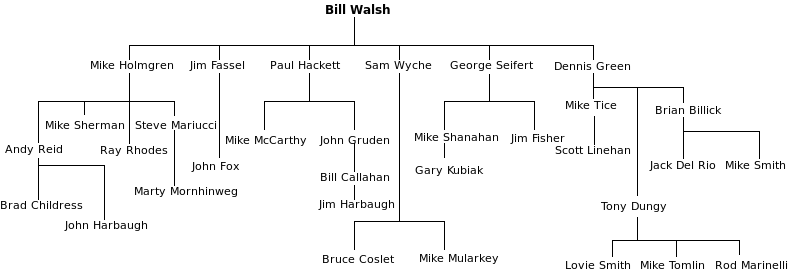
The offense was created by legendary 49ers head coach Bill Walsh, whose success is matched only by his simply incredible coaching tree that he has amassed, with Walsh, Dungy, Billick, Holmgren, Harbaugh, Gruden, McCarthy, and Shanahan all winning Super Bowls:

791px-Bill_Walsh_Coaching_Tree

(Side note: anyon else notice how many times Jeffrey Lurie seems to be going back to this well? His first hire as a head coach was Ray Rhodes, who coached in San Francisco under Walsh. His next hire? Andy Reid, who was schooled in Bill Walsh’s ways by Mike Holmgren in Green Bay. The Eagles reportedly targeted John Harbaugh, another Reid disciple, before interviewing Pederson (Reid), Ben McAdoo (who came up under McCarthy in Green Bay), Duce (Reid) and Pederson (Reid). Not sure what this means long term, but figured I would pass it on).

The west coast offense is predicated on short passes — think slants, bubble screens, and crossing patterns — with three step drops. The offense is designed to get plays out of the quarterbacks hands quickly and into the hands of the playmakers looking to get YAC. And often times, the offense will use the short passing game in lieu of the run.

Of course, the West Coast offense is an amorphous scheme — each coach that has inherited it from Bill Walsh has put his own spin on things — so don’t expect Pederson to run the exact same offense that Reid ran here.

But looking at the Chiefs offense will still provide us some clues as to what we can expect. While there are a lot of similarities between the offense Reid ran in Philly and his current offense in Kansas City, there are some noticeable differences as well. For starters, Reid has relied more heavily on the running game since he moved to the Chiefs. Below is the percentage of pass plays ran since 2013 and their rank compared to the rest of the NFL:

2015: 53.49% (27th)

2014: 56.34% (24th)

2013: 57.31% Pass (19th)

For comparisons sake, Reid passed on average 60% of the time from 2003 to 2012,  which ranked 8th in the NFL  (I could not find statistics for 1999-2002).

The other stark difference is how the Chiefs have embraced some new age spread concepts, which is why you will see them run some read option plays.

AJ Feeley recently described Pederson as a “new age West Coast” coach, which is an encouraging label. The NFL’s new passing rules favor the downfield passing game, leading many to question whether the West Coast offense, which is predicated on the horizontal passing game, is outdated.

If Pederson is able to marry the West Coast principles with the new age spread concepts that his predecessor Chip Kelly used to success, we could be onto to something. I know many are at the point during the breakup from Kelly where everything he did seems toxic.

But we would be foolish to dismiss the positive change he brought to the game: combining vertical and horizontal passing concepts with an up-tempo offense and simplified verbiage used for calling plays. This approach has been adopted to varying degrees across the league, including in New England (especially), Denver, Seattle and Carolina, all of whom played football games over the weekend.

It is the familiarity with the spread offense that makes me inclined to want Pat Shurmur to stay on as the offensive coordinator. Anyone that watched the Chiefs burn through timeouts and handle their two minute offense at a snails pace on Saturday night were quickly reminded how frustrating the time management — or lack thereof — was during the Reid era.

There are least two causes for these issues. One, Reid has an inefficient system in place for calling plays. As Reid acknowledged to the Kansas City Star, he calls the plays to Pederson, who then relays them to quarterback Alex Smith.

Add to it the complicated verbiage that is used for each play, such as “shift to halfback twin right open, swap 72 all-go special halfback shallow cross wide open,” and it is easy to see why the Chiefs struggle to manage the clock effectively, especially when compared to the one or two word play calling used by Kelly and Belichick.

Keeping Shurmur on board would provide for a good mix of the West Coast and spread offense concepts and give the Eagles the opportunity to improve on the limitations that are still plaguing Reid.

The Offense’s Strength Lies In Its Efficiency

A final thought on the Chiefs’ offense — and by implication, Pederson: don’t be fooled by total numbers. The Chiefs rank 27th in total yards, 30th in passing yards, and 6th in rushing yards. Compare that to the Eagles, who ranked 12th in total yards, 12th in passing yards, and 14th in rushing yards, in what many would consider a down year, and it’s easy to think that the Eagles are taking a step back offensively by switching to Pederson.

But that is prime example of why total numbers can be misleading. The Chiefs offense was highly efficient this year: they were 9th in points per drive according to FootballOutsiders.com, and 19th in yards per drive. (The latter statistic would be even better if the Chiefs did not have the best average starting field position in the NFL, again according to FootballOutsiders.com).

And the Chiefs offense was efficient in 2014 as well, where they ranked 12th in points per drive, 8th in starting field position, and 20th in yards per drive (again, the latter of which is dragged down by their great field position).

Compare that to the Eagles, who were the model of inefficiency in 2015, ranking 23rd in yards per drive, 19th in points per drive, and 25th in starting field position.

Why the disparity in total numbers versus efficiency? Two reasons: the Eagles were propped up by the fact that they ran more plays than most teams in the league, thus giving a false perception that they were a good offense when in fact, they were not.

Second, the Chiefs were much better at protecting the football (which is, at least in part, a byproduct of the risk adverse west coast offense predicated on shorter passes): they ranked 2nd in 2015 in turnover differential with a plus-14, compared to 22nd for the Eagles, with a negative 5.

Big Picture Take Away

I will address later this week why there are legitimate concerns about the Eagles front office and ownership, but we should do our best to compartmentalize those concerns and not let them impact our view of Doug Pederson. We have no idea how his tenure will turn out because there are so many unknown variables in the equation. But we do know that Pederson his highly respected around the league, runs a blend of the West Coast offense with new-age spread principles, and has spearheaded one of the most efficient offenses in the league over the last two years.

The State of The Eagles

As per usual, I returned from two weeks off the grid to find the Eagles in complete disarray.  I missed Chip’s firing, the last game of the season (a regretful win), and most of the “coaching search”.  However, that does put me in an interesting position, in that I was able to view things from a much different perspective than everyone else who was caught up in the narrative along the way.  What follows are my thoughts on a lot of different aspects of the team.  Lighter on stats/numbers than usual, but I just wanted to get high-level thoughts out there before they get stale.

Chip Kelly

A damn shame.  I still think Chip can be a great coach in this league, but it’s clear he won’t be a great GM.  If he ultimately can’t settle for just coaching, I expect we’ll see him return to college within a year or two.  Much has been written about Chip, so I won’t rehash it all here.  Let me just throw a few main points out and move on:

– I admire the emphasis on “culture”.  As I get older, I’ve found I’m more and more interested in having a team I’m happy to root for, rather than one that’s comprised of terrible people, no matter how often they win.  There are also unquantifiable benefits from having a great culture in place.  However, I don’t think Chip has any idea what real culture is.  As you might imagine, we talk a lot about this stuff in my MBA program, because culture is both really important to have and really difficult to develop.

Chip’s idea of culture looks like the football equivalent of casual Friday or crazy shirt day in a corporate setting.  It’s a shallow artifact.  Yes, it’s important to have players who work hard and buy into the system.  But if you take it too far, you end up with unthinking robots (slight hyperbole).  In a dynamic, relatively chaotic game like football, creativity and adaptability are vital to success.  As should be obvious, in this world unthinking robots won’t win.

This is especially problematic when you sacrifice talent in exchange for the “right” players.  I posted on this a while ago, but to repeat: It’s impossible to optimize along more than 2 dimensions, and it’s close to impossible to optimize along more than 1.  So for every additional point of emphasis placed on culture, there is a necessary tradeoff in talent.  Finding the balance is key, and it seems clear Chip didn’t know where that balance was.

– The GM learning curve – Chip showed no signs of getting up it.  A huge part of getting up to speed is continuous self-evaluation and iteration.  It’s possible for someone without NFL experience to become a good GM, but you have to assume you’re going to make a lot of mistakes early.  That’s ok, in fact it’s important.  What’s more important, though, is recognizing those mistakes, identifying why they were made, and avoiding them in the future.  Chip showed little appetite for self-scouting/criticism, which is extremely disappointing.  That, ultimately, is why he didn’t succeed here.  He didn’t evolve from year-to-year and didn’t seem overly interested in doing so.  EVERY coach/GM has to do that to be successful, as the league is constantly improving/adapting.  As a new coach/GM, it’s even more imperative, because you need to close the experience gap as quickly as possible, lest you wash out before doing so.

As I mentioned above, I think Chip could be very successful, IF all he does is focus on coaching.  Maybe he does that in SF, in which case things are going to get very painful for Eagles fans.  Given his apparent inflexibility, though, I think a safer bet is Chip forcing his way into control or leaving without it.

Job Specialization

Nobody should be both Head Coach and GM.  Honestly, I’m shocked any NFL team still allows this to happen.  Not only are each of those jobs really difficult (and more than full-time roles independently), but they require entirely different skills sets.  Moreover, a key aspect of the GM’s job is objectivity.  He needs to be able to assess each player’s value on an objective basis.  As a Head Coach, you have far too much contact with each player to maintain such objectivity.  So, even if you find someone who has both skill-sets (being elite in both areas should, theoretically, be extraordinarily rare), that person is STILL disqualified from being the GM for lack of objectivity.

In fact, I’d take the importance of specialization even further.  I don’t think the head coach should call the plays.  Let the OC call the plays, the DC call the defense.  The HC should focus on higher-level strategy and oversee the OC/DC, providing insights where he can.

As anyone who has watched Andy Reid can attest, calling the plays while also being charged with things like time management and replay challenges is too much for one person.  I’d want to find a coach who understands this and accepts it (Pederson seems like he does, though perhaps not for the right reasons).

Doug Pederson

Not thrilled, not disappointed.  Coaching hires are perhaps the hardest things for fans to evaluate in real time.  The decision process and data is almost entirely non-public, meaning we have absolutely nothing to base a judgement on.  At least with players we can go watch tape and review statistics, developing opinions based on that.  That’s still a very difficult thing to do well, especially for fans.  Coaching, though, is much more about strategic vision, management skills, player development, etc…  Outsiders just don’t have any evidence to work from, unless we’re looking at a coach with a very long track record.

That’s a long way of saying this: you really shouldn’t have an opinion on Doug Pederson.  If anything, you should be cautiously optimistic.

In that vein, here’s what I like about him:

  • Former QB – That should count for something.  He spent 10 years in the league, and played with McNabb and Favre.  Presumably, he spent a lot of time studying the game and seeing it from the player’s viewpoint.  That should prepare him well to identify with his players, something Chip Kelly might have struggled with.  It also provides him with a lot of credibility, which is really important for any leader to have prior to stepping in on day one.
  • Not talented – Not only was he a QB, but he wasn’t a very good one.  I like that.  I don’t know for sure, but I think it’s a safe bet that Pederson had such a long career in the league because he worked very hard and knew the game very well, and people probably liked playing/dealing with him.  He clearly didn’t stick around because of his physical attributes.  With little else to go off of, we could do a lot worse than a likable guy that works really hard and knows the game really well.
  • Backed up McNabb, Favre, and Couch – Perhaps this is wishful thinking, but Pederson should have a unique perspective on QB development.  He saw a young prospect develop into a star (McNabb), he saw a young prospect fail (Couch), and he worked with an all-time great (Favre).  Hopefully he gleaned some insight into why some guys succeed and others fail and can apply that here when finding/developing a new QB.

So that’s why I’m hopeful.  Of course, if Roseman can’t address some of the roster issues, it’s not going to matter much.

The Coaching Search

The whole coaching search narrative is a joke.  We don’t know who Lurie’s true “#1” option was and, regardless, IT DOESN’T MATTER.  The margin of error for coaching hires is huge.  Just as it’s important to recognize the margin of evaluation error in scouting/draft, we need to do the same with coaches. In other words:

How certain are you that your top choice is a better coach/will be a better coach than your 2nd choice?

As a fan, the answer is almost definitely “not at all”.  For Lurie, who presumably has a lot of info we don’t, the answer is probably “a little”.  Given the qualitative nature of both the evaluation and the job itself, I just can’t imagine a scenario where the top choice and the second choice (and further along), don’t have significant overlap when you apply a confidence interval or margin of error to the process.

So, don’t feel bad about not getting McAdoo or Gase, or whoever you think Lurie really wanted.  1) we don’t actually know who the top choice was, 2) even if we did, we don’t know the margin by which that person was the top choice (really important), and 3) the margin of error for these hires is so large, that it likely doesn’t matter anyway.

Meanwhile, there are a lot of other factors that go into getting a “great” coach (ahem…the QB…ahem), and we should spend more of our time focusing on those things than on who the media says was the best guy.  If Roseman is a great GM and they find a QB, the coach suddenly becomes a bit less important.

The QB Position

I don’t particularly like Sam Bradford.  He’s been a bad QB most of his career, with brief flashes of mediocrity.  That said, the Eagles aren’t bad enough to truly bottom out and get a top QB prospect, so we’re caught in no-man’s land.  In light of that, I’d franchise Bradford.  The West Coast offense that Pederson will presumably bring with him should be a great fit for Bradford, so maybe things finally click.  At the very least, you get some stability at the position, and the freedom to take a QB in the draft and get a year of practice/evaluation before deciding to turn things over to him.  Perhaps, if you’re lucky, you can even trade Bradford to some QB desperate team.

The only negative is a the cost, but given the roster, the Eagles likely won’t need that additional cap space next year.

Don’t forget the young WRs. The Eagles have invested a lot of resources in the WR corps., which still has a lot of developing to do.  Stability at QB would seem to be helpful in that regard.  Absent a compelling reason to change things, keeping Bradford for another year seems to be the best course of action.

Jason Peters and the OL

Perhaps the most upsetting storyline of the season was the regression of Jason Peters.  The team’s best player for a while, Peters declined before our eyes this year, despite my prediction that he could be expected to play at a high level for 2-3 more years (the aging curve post).  Maybe he can shift inside to G and prolong his career.  In any case, it’s clear the OL is now a huge concern.

I really wish I couldn’t say “I told you so”, but I’ve been warning for several years now that the OL is not a unit that can be built and forgotten about.  It requires continual maintenance and investment.  Basically, if you’re not spending at least a late round pick every year on the OL, you’re doing it wrong.

The Eagles have drafted just one OL in the past 3 drafts (Lane Johnson).  In the past 4 drafts, they’ve selected just two (Johnson and Dennis Kelly).  That’s just terrible draft strategy, especially considering late round OL have, by far, the best odds of turning into starting quality players.  I have a number of “rules” for drafting, generated from my research into draft strategy and history.  Two of my favorites (most compelling given the evidence):  ALWAYS trade 6th round picks for multiple 7th if you can and ALWAYS take 7th round offensive lineman (several if you can).

Most important of all, you don’t want to be in a position where you need to replace multiple OL in the same year.  It’s not that hard to find one new starter in one offseason.  It is much harder to find two, at a reasonable price.  It is extremely difficult to find three, especially without blowing your cap allocation.

The current state of affairs basically means the Eagles are at least 2 offseason aways from having a high-quality OL with some semblance of long-term stability, and that’s assuming they manage to get the right players.

Howie Roseman

It all comes down to Howie, finally.  He is now, unquestionably, in charge of all player personnel. All moves can be attributed to him.  We should know pretty quickly how much of the recent past was with his blessing or over his objections.

What do I want to see from him?

  • Trade with Chip.  I know Chip doesn’t officially have personnel control in SF, but a new coach typically gets some allowance for a few of “his guys”.  The Eagles have a lot of those guys, and Howie should be really anxious to give Chip whoever he wants.  #BadGMTheory is firmly in play here, in that Chip has shown that he undoubtedly overvalues “his” guys.  So Riley Cooper (pleasepleaseplease), Josh Huff, Sam Bradford?, etc…, tell Chip to name his price and ship them out.
  • Trade down in the draft, unless there’s a QB (Lynch) that Pederson loves.  The missing 2nd round pick is a killer, but the Eagles are in a decent position to recoup it by sliding down in the first round.  This will be the true test of Howie’s GM ability.  Can he maneuver at the draft to successfully get the players he wants at a  reasonable price while adding picks in the process.  Joe Banner was really good at this, and it’s the only way to consistently “win” the draft.
  • Use free agency for maintenance and depth, not star acquisition.  Free Agency is not the place to sign “impact players”.  By definition, you have to overpay for them here. That, coupled with the inherit uncertainty regarding fit in a new scheme, means it’s a dubious proposition.  Rather, free agency should be used for middle-of-the-roster players that fill the glaring holes so that the draft process can be used to shoot for the biggest impact.  For the Eagles, in my opinion, that means finding a serviceable offensive lineman (think first guy off the bench or #5 starter), a solid #3 receiver with great hands, a #3-#4 cornerback, and perhaps another safety.  Obviously there are other areas that can be addressed, but that’s where I’d focus.  If there is an “impact” opportunity, it has to be taken at OT position.  It’s just not worth the risk for anywhere else right now.

Reasons for Hope

I said at the top that this isn’t quite the mess some believe it to be, then I proceeded to describe a lot of the biggest problems.  Here are the reasons I’m hopeful:

  •  Track Record – The Eagles, under Lurie, have a very long history of sustained competitiveness.  This is not a bad franchise.  In 21 years of ownership, the team has won fewer than 8 games just six times, with three of those coming in the first 5 years of ownership.  Of course, the long period with Reid and McNabb forms the bulk of that success, but the team also won 10 games twice with Ray Rhodes as coach and Rodney Peete and Ty Detmer at QB, and it won 10 games twice with Chip Kelly at the helm.  I just don’t see any compelling reason to believe the team won’t recover, just as it’s done every time the coach has changed under Lurie.
  • 27 wins in past 3 years – That’s not great, but it’s also not bad.  We’re not looking at a talent-less team here; they’re not starting from square one.  Expectations and the narrative make the performance feel worse than it actually was, but make no mistake: this is not a bad team, it is firmly mediocre.  I know that’s not too exciting, but it’s an important distinction to make as we reframe our expectations for the future.
  • Talent – Fletcher Cox, Bennie Logan, Jordan Hicks, Mychal Kendricks, Jordan Matthews, Zach Ertz, Lane Johnson, maybe Agholor.  There is young (relatively) talent on this team, and there are building blocks in place.  Moving to a 4-3 defense might spark a massive improvement on defense, as the personnel has been a better fit for that alignment than the 3-4 since the day the switch was made.  Jordan Matthews, despite the drops, is still putting together an impressive start to his career, especially when you consider the inconsistent/bad quarterbacking he’s had.  The drops need to stop, but they’re not as big a deal as they seem.  Agholor meanwhile, is an unknown.  He was close to invisible this year, which obviously isn’t a good sign.  But it’s too early to call him a bust.
    • He had 23 catches and 283 yards with a catch rate of 52.6%.
    • Demarcusyious Thomas had 22 catches for 283 yards and a catch rate of 56.4% his rookie year.
    • Roddy White had 29 catches for 446 yards and a catch rate of just 42% his rookie year.

I’m not saying Agholor will turn into those guys, there are other players with similar performances that never panned out, or haven’t yet (Jonathan Baldwin, Mike Williams, Matt Jones).  I am saying we should all withhold judgement for another year.

Closing

I’ll leave it there for now.  The Chip Kelly experiment didn’t go like I’d hoped, and there are some big issues to resolve, but the franchise has a long record of success and there are pieces in place for a quick turnaround.  Besides, it can ALWAYS be worse…for example, you could be a St. Louis fan…


Scouting Adam Gase

http://www.gettyimages.com/detail/news-photo/offensive-coordinator-adam-gase-of-the-chicago-bears-looks-news-photo/502856292


Patrick Causey, on Twitter @pcausey3

With multiple reports suggesting the Eagles are set to aggressively pursue Bears offensive coordinator Adam Gase, and one report going as far as saying the Eagles have offered him the job, I decided to dig into Gase’s background and the type of offense he will bring to the table.

Almost intuitively, the first thing I noticed was the differences between Gase and his predecessor, Chip Kelly. This same thing happened when Kelly was hired. Many celebrated the fact that Kelly was a run first coach who liked big defenders. As Kelly was known to say, “big people beat up little people.” This was a breath of fresh air after 14 years of Andy Reid giving up on the run with reckless abandon and relying on undersized defenders who could “fly to the football” (but not make the tackle, of course).

So I have a feeling many Eagles fans will appreciate some of the things that Gase brings to the table that were perceived weaknesses for Kelly: Gase has a pro background (for whatever that is worth), he has shown a willingness to adapt his offense to fit his personnel, he has a great track record with quarterbacks, and he strikes the proper balance between holding players accountable but also maintaining close relationships.

Let’s break these down further.

From Saban’s Protegee to Cutting His Teeth With Brilliant Offensive Minds

Here’s something that will become a punch line if the Eagles hire Gase and things do not go smoothly: Gase has never played college or professional football. Oh, just imagine the calls to WIP and 97.5 The Fanatic after a three game losing streak…

But I digress. While Gase lacked the playing experience, he cut his teeth among some of the best coaches in the game.

Gase attended Michigan State University while Nick Saban was the coach and was able to work under Saban as a student assistant coach. When Saban left for LSU in 2000, Gase was the only assistant coach that he brought with him, a telling sign about the level of respect Saban had for Gase. “It was a conceptual thing with Adam, he just understood how things worked and he was willing to work and start from ground zero,” Saban said in an email to the New York Times.

From there, Gase spent the next 13 years bouncing around the NFL with the following jobs:

  • 2003-2007: Detroit Lions, scouting assistant, offensive assistant, and quarterbacks coach
  • 2008: San Francisco 49ers: offensive assistant coach
  • 2009-2014: wide receivers coach, quarterbacks coach, offensive coordinator
  • 2015: Chicago Bears: offensive coordinator

Along the way, he has worked with coaches that abide by a variety of offensive philosophies: the west coast system under Steve Mariucci, the Don Coryell-based digits system under Mike Martz, and the offense Peyton Manning ran to great success with the Indianapolis Colts.

An Ever Evolving Offensive Scheme that Adapts to his Personnel

It was that diversity of experience that shapes Gase’s offensive scheme now, which you cannot neatly fit into one package.

Looking over film of the offenses that Gase ran in Denver and Chicago, you see concepts from a number of different offensive systems. One minute the Broncos or Bears would call a Peyton Manning staple: the dig concept; the next, it’s a West Coast offense staple with the quick slants; and the next minute, its deep vertical passes from the Mike Martz/Air Coryell school of thought. Mixed in, you see some bubble screens, and of course, even a little no huddle, up-tempo offense (but relax, Eagles fans, it is used sporadically, not as an overriding philosophy).

The fact that Gase has married so many different passing concepts into one hodgepodge of an offense speaks to one of his greatest strengths: his ability to adapt to his personnel.

As Gase explained to Jenny Vrentas of SI.com: “The most important thing that I have learned in this whole experience since 2011 is every guy is different and you need to adjust your offense to who you have. Every team is functioning around the quarterback.”

To say that Gase has worked with a diverse set of quarterbacks would be an understatement. From the run first, throw third approach of Tim Tebow, to the statuesque pocket passer of Peyton Manning, to the middle ground provided by Jay Cutler, Gase has seen it all.

At each stop, he modified his offense to maximize what his quarterback did best. With Tebow, it was a run first offense with simple passing concepts and designed quarterback runs to mask Tebow’s obvious flaws. The Broncos lead the NFL in rushing attempts with 546, while ranking dead last in passing attempts with 429.

When the Broncos acquired Peyton Manning in 2012, the Broncos nearly flipped the script, passing 588 times to 481 rush plays. Of course, passing more with Manning than Tebow doesn’t take a rocket scientist. But Gase quickly developed Manning’s trust with his football acumen and untiring work ethic. Manning called Gase “the smartest guy I know” who has a “photographic memory.”

http://www.gettyimages.com/detail/news-photo/denver-broncos-offensive-coordinator-adam-gase-has-a-word-news-photo/459468754


When Mike McCoy became the head coach of the San Diego Chargers in 2013, Gase was promoted to offensive coordinator. He revamped the Broncos offense to incorporate more of the passing concepts that Manning was familiar with and used to great success in Indianapolis.

One such play, the “dig” concept, has been Manning’s bread and butter since he entered the league. Photo courtesy of Chris Brown at Grantland.com:

grant_h_dig_diagram_sl_64011

The dig concept was simple: the outside receiver runs a five-yard in-route, while the inside receiver runs a deep in or dig route. On the opposite side of the field, the outside receiver runs a go route, with the inside receiver running a “read-seam” that breaks depending on whether there is a single high or two deep safeties.

Manning ran this play up to 10-20 times a game with minor variations (wait — you mean an offense can be predictable but successful as long as players execute?! What a novel concept!). While it was used in 2012 under McCoy, Gase relied on it even more, as well as other concepts that Manning was accustomed to. Needless to say, it worked: the Broncos rode the most prolific offense in NFL history to a Super Bowl appearance.

But it’s not just offseason adjustments; Gase has also shown a proclivity for making mid-season and mid-game adjustments. In week 11 of the 2014 season, the Broncos offense hit a standstill. Touchdown machine Julius Thomas suffered an ankle injury that hampered his production and Manning’s arm strength was becoming problematic, especially as the weather got colder.  The Broncos had lost two of three, including an embarrassing 22-7 drubbing at the hands of the St. Louis Rams.

So Gase abandoned the pass heavy approach in favor of a more dominant rushing attack, often using six offensive lineman and relying on C.J. Anderson’s fresh legs to carry the heavy workload.  Manning went from averaging 40.7 pass attempts per game to 31.6, and the offense flourished. The Broncos ended the season winning five out of their last six games en route to a 12-4 record.

It is this versatility and intelligent play calling that led Mike Martz to call Gase one of the three best offensive minds currently coaching in football (if you have not already read that piece, I highly recommend it). John Fox said Gase was “a master of innovation” and John Elway, the Broncos president, called Gase a “genius.”

Gase’s versatility will likely be a selling point to Jeffery Lurie and Howie Roseman. Kelly seemed hellbent on fitting players to his system instead of the other way around. Gase takes the opposite approach, catering his offense to his personnel and the circumstances, and has done so to great success.

Improving Jay Cutler

With Adam Gase as the quarterbacks coach, Tim Tebow led the Broncos to an 8-8 record and a wild card playoff win. The record setting offense of 2013 was Gase’s best statistical accomplishment. And his work in 2014 was a good example of how Gase can adjust on the fly.

But perhaps his best work has been his reclamation project of the enigma that is Jay Cutler. Cutler was once considered one of the best young quarterbacks in the NFL. But over the last six seasons, his bad habits are matched only by his bad reputation, with many around the league considering Cutler a lost cause.

But Gase worked with Cutler on limiting his turnovers and making smart decisions under pressure. And he tailored the offense and his play calling to effectuate that goal: providing Cutler more time to examine the defense at the line of scrimmage and calling more pass plays that called for Cutler to get the ball out quickly.

Under Gase, Cutler has played some of the best football of his career. Consider this: Cutler’s career DYAR and DVOA efficiency ratings, per FootballOutsiders.com: 25.88 and 20.55, respectively. (His DYAR high was 4, with a low of 33; his DVOA high was 4, with a low of 30).

But this year? Cutler ranks 10th in DYAR and 13th in DVOA. He hasn’t had numbers that high since his third year in the league (2008), when many saw Cutler as the second coming of Brett Farve. He has a career high in passer rating (92.3) and the second best interception rate (2.3%) of his career. And all of this was accomplished with his top four receivers — including Pro Bowl talent Alshon Jefferey — missing a combined 31 games.

http://www.gettyimages.com/detail/news-photo/jay-cutler-of-the-chicago-bears-warms-up-in-the-pregame-news-photo/502085342

In a league starving for quarterbacks, one of Gase’s strongest selling points will be his success with each of the quarterbacks he’s coached. From Tebow, to Manning, to Cutler, each have benefited from Gase’s tutelage. And with the Eagles facing uncertainty at the position, bringing in a coach with experience in getting the most out of whoever their quarterback is — be it Sam Bradford or a high draft pick — will be critical.

Balancing Interpersonnal Relationships with Holding Players Accountable

One of the strongest criticisms leveled at Kelly was his inability to connect with his players but also hold them accountable. It is not an easy task; it requires striking the proper balance between developing close ties with your players while holding them to a high standard.

As Adam Jahns of the Chicago Sun Times details, Gase has found that proper balance with his players:

He’s all about accountability,” Slauson said. “He expects guys to do what they’re supposed to do. He holds guys to a very high standard.

“As offensive linemen, we’ve got to be on the correct guys using the correct technique. He’s always hammering that home all the time. He doesn’t let anything slide.”

But there is a “working relationship,” receiver Marc Mariani said. A dialogue exists with players, particularly with quarterback Jay Cutler, who has a career-best 92.8 passer rating.

“That’s what has made him successful in the coaching business,” Mariani said. “He commands the room, but he engages his players and he has great relationships with all of us.”

It’s that ability to connect with players while pushing them to achieve their potential that has resonated most with his players. Anyone that has followed the fallout from Chip Kelly’s firing will understand that the Eagles are looking for this ability from their head coach to rebuild the cohesion that is missing in the locker room. Gase seems to have that ability, assuming it can translate over to the entire time.

Big Picture

As with any coaching candidate, uncertainty remains. How much can we credit Gase for the Broncos success under Peyton Manning? How much credit does Gase deserve for “turning Cutler around” when the Bears finished the year 6-10? Even if Gase is the quarterback whisperer and a brilliant offensive mind, can he oversea an entire team and build a respectable defense?

These are all valid concerns and questions that Gase must answer during his interview with the Eagles. But based on my review, I think the Eagles could do a lot worse than hiring Gase. In fact, I think he is their best bet.

What Rhymes With Guenther? Being clever is hard

Seriously being clever is hard. Guenther the Hunter? Guenther wont have a Punter? When he uses the bathroom he’s known as Guenther the dum…

I digress.

Overview:

Guenther has been an under the radar name that has intrigued me while looking at candidates for the next Philadelphia Eagles head coach. Guenther is a Richboro native and Council Rocks graduate. He played Division 3 football locally at Ursinus College. He became a head coach at a very young age and has experience winning hearts and minds of the region on the recruiting trail. He has spent the last 15 years grinding his way up through the NFL coaching ranks. He has head coaching experience as well as experience working in all three phases in the NFL. He’s worked for two of the best defensive minds in football with Marvin Lewis and Mike Zimmer. If the Eagles hire a defensive guy I’d rather have Guenther than McDermott.

Resume:

1994-1995: Western Maryland (McDaniel); Graduate Assistant

1996: Ursinus College; Defensive Coordinator

1997-2000: Ursinus College; Head Coach

2002-2003: Washington Redskins; Offense Quality Control

2005: Cincinnati Bengals; Defensive Staff Assistant

2006: Cincinnati Bengals; Assistant ST/Assistant DB

2007-2011: Cincinnati Bengals; Assistant ST/ Assistant LB

2012-2013: Cincinnati Bengals; LB coach

2014-2015: Cincinnati Bengals; Defensive Coordinator

How he got here:

After a successful college career at Ursinus College where he set the program mark for career tackles, Paul Guenther spent a few years at Western Maryland (now McDaniel) before returning to his Alma Mater to become the DC. When the head coach left to start an FCS program at Jacksonville State, Guenther became the new head coach. He was only 25 and was the youngest HC in college football. Despite his youth Guenther compiled a 25-18 record as head coach including 10-2 and 8-3 records in his final two seasons. He left after the 2000 season due to disagreements with the college president about the level of commitment from the school, as well as to pursue coaching at a higher level. He was hired by the old ball coach to be the offensive quality control coach in Washington. In 2005 his time with Marv Lewis and Hue Jackson in Washington led to the Bengals hiring him. Since that point he has slowly worked his way up the ranks in Cincinnati.

In 2012 Guenther was given full control of the LB room. Along with Mike Zimmer he helped bring out the best in talented head case Vontaze Burfict. He helped turn Vincent Rey from fringe roster player into a highly productive if unsung starting linebacker. He taught an old dog new tricks when he got James Harrison who had been a 34 OLB his entire career to become an off the ball linebacker in the 43.

When Mike Zimmer was hired away, both Zimmer and the Vikings as well as Jay Gruden who he had worked with during their time in Cincinnati both tried to hire him as their DC. Cincinnati wasn’t going to lose both OC, DC and promising young defensive coach so they promoted Guenther to DC. Here’s how he’s performed:

2014:

  • 22nd in Yards Allowed
  • 20th in Passing Yards Allowed
  • 20th in Rush Yards Allowed
  • 12th in Points Allowed
  • 32nd in Sacks
  • T-10th Takeaways
  • 14th in DVOA

2015

  • 11th in Yards Allowed
  • 20th in Passing Yards Allowed
  • 7th in Rush Yards Allowed
  • 2nd in Points Allowed
  • 9th in Sacks
  • 6th in Takeaways
  • 10th in DVOA


The 2014 number are not great. That unit was pretty mediocre. However the 2015 group has been pretty good. That shows an ability to improve a unit and learn from shortcomings. When you consider the 2015 Bengals offense has scored a lot (7th), and the defense has had to play with the lead, the numbers are even more impressive.

Takeaways:

Paul Guenther isn’t a homerun candidate. You’re not going to win “shiniest new toy” for hiring him. But he’ a local guy (which Lurie seems to value), with head coaching experience, a diverse background, has paid his dues, can work with “big personality” players, and comes from a team with a strong defensive identity. The Eagles don’t need to win the press conference. They don’t need a big ego. They need a well-rounded coach. Paul Guenther fits that criteria.


Sources:

http://articles.philly.com/1997-04-10/sports/25529329_1_paul-guenther-assistant-defensive-coach-ursinus-college

http://articles.philly.com/2000-11-30/sports/25614248_1_collegeville-school-ursinus-coach-ursinus-president-john-strassburger

http://www.pro-football-reference.com/coaches/GuenPa0.htm

http://www.cincyjungle.com/2013/11/20/5126662/a-master-at-work-behind-the-scenes-bengals-linebackers-coach-paul