On Doug Pederson, The Eagles Front Office, And The Quarterback, Part 2

http://www.gettyimages.com/detail/news-photo/owner-jeffrey-lurie-of-the-philadelphia-eagles-and-general-news-photo/181684638

Patrick Causey, on Twitter @pcausey3

Bill Belichick and Tom Brady.

Bill Polian, Tony Dungy, and Peyton Manning.

John McVay, Bill Walsh and George Seifert, and Joe Montana and Steve Young.

Kevin Colbert, Bill Cowher and Mike Tomlin, and Big Ben.

The history of the NFL is replete with examples of Super Bowl winners having a strong general manager, a great head coach, and a franchise caliber quarterback.

The Eagles currently have Howie Roseman, Doug Pederson, and Sam Bradford.

Is this triumvirate good enough to finally end the Super Bowl drought that has plagued this city’s loyal fan base for over 60 years? In order to answer that question, I wanted to analyze each position — head coach, front office and quarterback — in a three-part series.

As I mentioned in Part 1 (which you can read here), it is too early — and indeed, impossible — to judge how Pederson will turn out. But we have enough information from which to draw reasonable conclusions on Howie Roseman (Part 2) and Sam Bradford (Part 3).

Digging deep into the Eagles front office leaves an indelible impression that you are watching an episode of “NovaCare 90210“: politicking and in-fighting begetting backstabbing and constant turnover.

A lot of the finger pointing has been aimed at de facto general manager Howie Roseman. And as we will see in a moment, some of it is justified. But by focusing all of our efforts on Roseman, we run the risk of ignoring the fact that Jeffrey Lurie is just as, if not more, responsible for the mess facing this Eagles franchise.

It Starts With Jeffrey Lurie

http://www.gettyimages.com/detail/news-photo/jeffrey-lurie-owner-of-the-philadelphia-eagles-stands-on-news-photo/181228120

To be fair, it isn’t all doom and gloom.  Per Pro-Football-Reference.com, the Eagles have enjoyed their best run in franchise history under Lurie with a record of 186-148, a 55% win percentage that considerably bests the Eagles franchise record prior to Lurie’s arrival of 362-434 (45%). During his 21 years as owner, the Eagles have made the playoffs 12 times, played in 5 conference championships, 1 Super Bowl, and as Brent pointed out last week, have 12 seasons of at least 10+ wins, and only 6 seasons of below .500 football.

The level of consistency that Lurie has achieved is not easy in a league that is designed to manufacture parity.

But if we peel back the layers of this onion a little more, we see a clear delineation point between when the Eagles were close to the gold standard that Lurie espoused over a decade ago, to now, where they more closely resemble a model of mediocrity.

From 2000 until 2004, the Eagles were an impressive 59-21, a .737 win percentage. But for the next decade, from 2005 until 2015, the Eagles have amassed a 93-82 record, a .531 win percentage

What happened? What caused the decline? For starters, the team’s prime players of Donovan McNabb, Brian Westbrook, Brian Dawkins, et al, started to age, and the Eagles front office did a terrible job of finding replacements vis-a-vis the draft. That forced their hand to seek to fill holes via free agency, which, as we saw this season, is rarely a successful strategy.

All of this was occurring with a backdrop of constant turmoil and power struggles in the front office, as detailed by Les Bowen of Philly.com said earlier this week:

I’ve covered the Eagles since 2002 and what I recall is intrigue and turmoil, pretty much consistently. Reid pushed out Tom Modrak. Tom Heckert was Reid’s guy; when Heckert left, Joe Banner maneuvered into a greater personnel role, and arranged one for his protégé, Roseman. Roseman pushed aside Jason Licht, now general manager of the Bucs, after Licht privately disparaged Roseman’s “football guy” credentials, people close to the situation have said. Eventually, Banner was cast aside in favor of Roseman.”

In other words, these issues precede Howie Roseman, which is why it isn’t fair to completely blame him for the current state of affairs. The one constant through it all is the owner. Lurie has tolerated these types of power struggles for at least the last 15 years, which has led to a constant turnover that you do not see in the best NFL franchises.

Consider this:

Kevin Colbert has been in charge of the player personnel department for the Pittsburgh Steelers, as the director of football operations and then general manager, since 2000. During that time he has worked with only two head coaches, Bill Cowher and Mike Tomlin, winning Super Bowls with each.

Bill Belichick has served as the the head coach and general manager of the New England Patriots since 2000, winning four Super Bowls.

The New York Giants have had three general managers since 1979: George Young (79-97), Ernie Accorsi (98-06) and Jerry Reese (07-Present). During that time, they have had Hall of Fame coaches Bill Parcels and Tom Coughlin, and have won four Super Bowls.

The Green Bay Packers have had only three general manager type figures since 1992, and four head coaches during that time period (three if you don’t count the one year tenure of former Eagles head coach Ray Rhodes). They won two Super Bowls.

Ozzie Newsome has been the general manager of the Baltimore Ravens for 20 years, the only person to hold that position since Art Modell moved the team from Cleveland to Baltimore. He’s had three coaches during that time period, with the latter two, Brian Bilick and John Harbaugh, each lasting 8 seasons (and counting for Harbaugh) and each bringing home a Super Bowl trophy.

Since 1997, those five franchises account for 12 of the 19 Super Bowls.

Obviously talent goes a long way towards bringing in those championships. But we would be foolish to ignore that the best franchises all follow the same blueprint, a blueprint which is predicated on a foundation of patience, continuity, and playing the long game.

Under Lurie, the Eagles have never quite been able to get it right. Sure, Andy Reid coached here for 14 years, and for that, Lurie deserves credit. But the other three coaches under Lurie — Rich Kotite, Ray Rhodes, and Chip Kelly — lasted an average of 2.66 seasons.

And Lurie has cycled through front office executives like they are going out of style: from Modrak, to Heckert, to Reid, to Banner, to Roseman, to Kelly and now, back to Roseman, there has been a revolving door of executives that is robbing the Eagles of the continuity and consistency that it needs to compete with the best franchises in the NFL.

That is why any discussion about the problems at One NovaCare Way must start and end with Jeffrey Lurie. Until he is able to forge a front office that spends more time working together than they do looking out for their own self interest, the Eagles will continue to struggle on the field.

Roseman Has Made The Situation Worse

http://www.gettyimages.com/detail/news-photo/howie-roseman-evp-of-football-operations-for-the-news-photo/496475230

When evaluating Howie Roseman as a general manager, it’s important to separate the two discernible roles that the carries: talent evaluation/acquisition and fostering a productive environment in the front office.

The former category yields a mixed bag of results. Rosman is a smart guy that has a reputation for being an incredibly hard worker. He understands value better than most, and has proved especially adept at pulling off trades. He is analytically inclined, something the NFL needs more of, and has good discipline when it comes to managing the salary cap. In those senses, he seems to be the polar opposite of Chip Kelly.

Those positives attributes have undoubtedly played a part in drafting Fletcher Cox, Bennie Logan, Lane Johnson, Zach Ertz, Jordan Matthews, and Mychal Kendricks, trading for Darren Sproles and DeMeco Ryans, and signing Connor Barwin and Malcolm Jenkins. Good moves by any measure.

But his tenure as general manager has also produced first round busts Danny Watkins and Marcus Smith, second round busts in Nate Allen and Jaiquawn Jarrett, and free agent busts Nnamdi Asomugha, DRC, Vince Young, and Ronnie Brown.

In other words, some good, some bad.

But it is that second category that is hard to ignore. Roseman has a history of butting heads with many people inside the Eagles organization, a fact he acknowledged yesterday following the press conference to introduce Doug Pederson.

This issue has led to multiple reports that paint Roseman in an extremely negative light.  And while each of these reports can be explained away in isolation, it is the aggregate that makes it impossible to ignore:

  • Jason La Confora’s report in 2013 when the Eagles head coaching search hit a standstill, which stated “I wish I had a dollar for every time someone told me one esteemed coach or another advised one of the Eagles’ top candidates not to take the job precisely because of Roseman’s presence there…The rumblings about Roseman lacking nuance and foresight, about him turning people off with how drunk with power he’s become, only grow louder as his coaching search grows stranger.”
  • Geoff Mosher, one of the best Eagles reporters in the game, has published at least three reports on the problems that Roseman has created in the Eagles front office. The first came in 2014, which pinned the Gamble firing on Roseman and alluded to a growing tension between Roseman and Marynowitz: “…bad blood in Roseman’s scouting department has been brewing and Gamble’s departure could be just the first shoe to drop. Assistant director of player personnel Ed Marynowitz has also butted heads with Roseman, the sources said.”
  • In 2015, Mosher followed up that report with a more in-depth look into what it was like to work with Roseman: “working with Roseman can be unbearable, especially in times of adversity. Roseman was so driven by fear of failure that he didn’t stick to the process and quickly turned on his staff when problems arose. Roseman was also distrustful of his staff, fearing that underlings would try to climb the ladder and snatch away his job the same way he did as he worked his way up the chain for 16 years. His paranoia either drove other talented executives away or landed them pink slips. That’s why guys like Jason Licht, Marc Ross, Tom Heckert, Louis Riddick, Tom Gamble and others had short careers with the Eagles as Roseman worked his way up. “He’s not a leader,” one person who worked under Roseman said. “He’s an authority figure.
  • Another report from Goeff Mosher on the problem in the Eagles front officeAccording to multiple personnel men who have worked under Lurie and Roseman, the team’s unconventional front office structure has enabled management turmoil to prevail year after year despite the rash of changes around Lurie and Roseman. The root of the problem is the flow of information from Roseman to Lurie, which is spun exactly the way Roseman wants it. So although Lurie is known to take “voluminous notes” about the goings-on in personnel matters surrounding his franchise, he’s essentially scribbling down the lecture coming from Roseman’s podium. “A toxic environment,” as one former Eagles personnel executive deemed it. Lurie trusts Roseman blindly and implicitly, which is the only reason to explain why he’s sat back and allowed several well-regarded football men to become fall guys when the Eagles didn’t win or made bad draft picks. Someone always pays the price — Marc Ross, Lou Riddick, Jason Licht — and now Gamble. Someone other than Roseman, of course.”
  • Louis Riddick has repeatedly ripped Roseman and the toxic front office he’s created. When Roseman was first demoted, Riddick had this to say: “And the people who shouldn’t be doing what they are doing are no longer doing it. I mean Tom Gamble, Jason Licht, I’m gonna throw myself in there… these are some quality football person. Some football people who really know what they’re doing. People who know the game, who have strong personalities. Let’s just say they went into Philadelphia one way and left there another way.”
  • When Kelly was fired in 2016, Riddick questioned why everyone but Roseman was held accountable: “I have no idea [why Roseman is still there]. Everyone else has been removed Everyone else has been held accountable except him.
  • Mark Eckel of NJ.com reported that Roseman had a hand in Kelly and Marynowitz being fired: “Howie has been poisoning Ed,” one person with knowledge of the infighting said. “And he has his people doing the same.” According to several league sources, the firings have Roseman’s fingerprints all over it. “I can’t believe it,” a long-time executive for an Eagles rival said when told of Kelly’s firing. “They did what? Are you serious? No, you’re kidding right? You can’t be serious.” When he finally realized it wasn’t a joke, he put the onus on the former and probably future general manager. “Howie got him,” the executive said. “He won. It took him some time, but he got to the owner, and he won. That’s just amazing. What is Lurie thinking? That place is just out of control.
  • Rueben Frank of CSNPhilly.com reported back in 2014 that Jeffrey Lurie thinks Howie Roseman is a messiah that can do no wrong‘But Lurie is fiercely loyal to Roseman, who’s risen through the organization from intern to GM and has been here since 2000. Lurie even kept Roseman over his boyhood friend, team president Joe Banner, when Roseman and Banner were locked in a power struggle a few years ago. “Jeffrey sees Howie as a messiah,” a one-time Eagles front-office exec said Wednesday. “Howie can do no wrong in his eyes.”‘ Frank went on to point out how a number of Eagles executives such as Tom Heckert, Jason Licht, Ryan Grigson (who accepted the Colts‘ GM job), Louis Riddick, and now Gamble have all been removed over the years while Roseman still remains.
  • A week ago, Frank cited another league source acknowledging Roseman is the problem: “Everybody knows Howie is holding back the organization,” an NFL front-office executive said earlier this week. “Everybody but one person. And that person is the only one who matters. Jeffrey Lurie. He just doesn’t see it.”
  • Just on Monday, Peter King, of SI.com, reported that one of the reasons that Tom Coughlin turned the Eagles down because he “wasn’t sure how his working relationship with Eagles football czar Howie Roseman would go.”
  • And during the confusing coaching search, Les Bowen and Jeff McLane insinuated that the Eagles did not interview Sean McDermott because of a personnel dispute he had with Roseman back in 2010.

Again, some of these reports should be taken with a grain of salt. La Confora reported that Roseman prevented the Eagles from hiring a coach, yet a few weeks later the Eagles landed their top target in Chip Kelly. Louis Riddick reportedly lost out on the General Manager position to Roseman in 2010, so it is not a stretch to imagine that some bad blood exists between the two.

But that’s still 11 reports from 8 writers, some of whom cited multiple sources. At some point, we have to accept that where there is smoke, their is fire. And that fire was all but confirmed yesterday when Roseman had to say this:

And this:

And this:

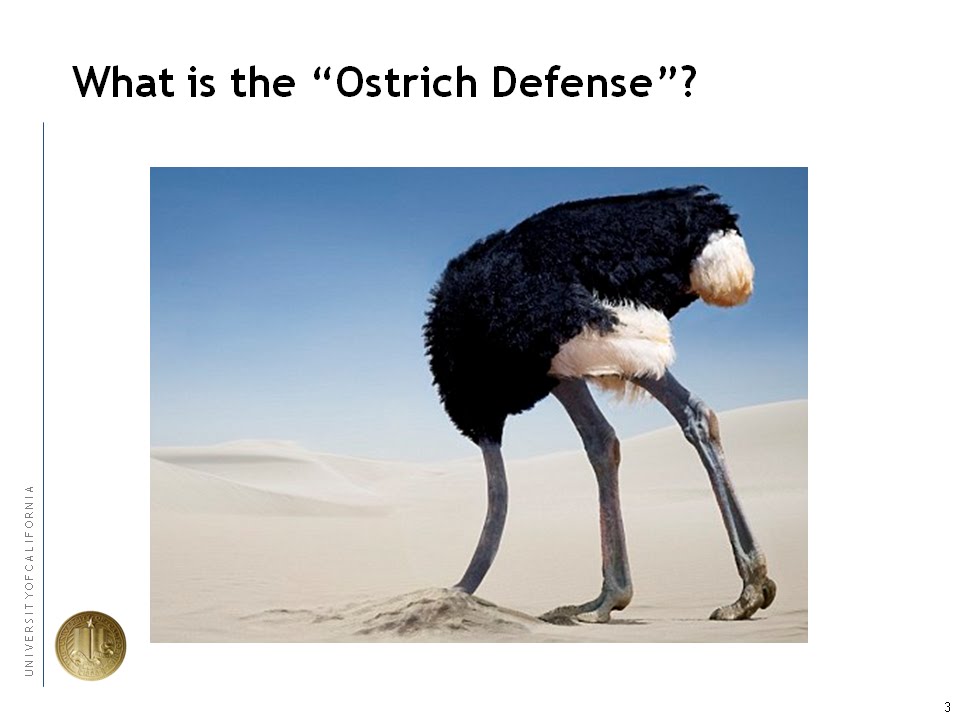
Again, caveats apply, and it would be extremely unfair to pin the Eagles mediocrity entirely on Roseman. But we cannot absolve him of blame either. While the rest of the league, and most of the fan base, has recognized these issues, Lurie seemingly has applied  the ostrich defense so far:
maxresdefault

It Can Still Be Turned Around

The good news is that this can all be turned around. I’d be lying if I said I wasn’t skeptical. These issues have persisted so long that they seem systemic. But, failure has a funny way of humbling people. So maybe Roseman did self-reflect and grow this last year. And while the coaching search certainly left a bad taste in my mouth, perhaps hiring Pederson, who is described as a laid back guy, might be the perfect yin to Howie Roseman’s yang. If the Eagles can finally find the right mix, focus on building through the draft, and finding a franchise caliber quarterback, this thing can turn around quickly.

If not, perhaps Lurie will finally do what many thought he should have done this offseason: clean house and start over.
On Doug Pederson, The Eagles Front Office, And The Quarterback Part 1

http://www.gettyimages.com/detail/news-photo/offensive-coordinator-doug-pederson-of-the-kansas-city-news-photo/460828028

Scouting the Eagles new coach and why it would be foolish to dismiss Doug Pederson’s tenure before it even starts.

Patrick Causey, on Twitter @pcausey3

The wait — or torment, depending on your patience level — is finally over. The Philadelphia Eagles have hired Kansas City Chiefs’ offensive coordinator Doug Pederson to be their next head coach. With the hire, Jeffrey Lurie seems to be reaching back in time trying to rekindle the magic he established when he hired Andy Reid, another relatively obscure offensive mind with no play calling experience.

Despite what you may hear on the radio or read on ESPN, we legitimately have no idea whether Doug Pederson will be a good head coach. That’s because there are so many unknown variables right now: can Pederson perform the necessary duties required of him as a head coach? Who will be Pederson’s assistants? Will the Eagles get back to building through the drat and supplementing through free agency? And can the Eagles front office finally– finally — coexist long enough to attain the stability that this franchise has never achieved with Jeffrey Lurie as the owner?

(Author’s note: this post focuses exclusively on Doug Pederson. I will address the Eagles front office in a post later this week).

We Have No Idea How This Hire Will Turn Out

The only concrete conclusion that we can reach about Doug Pederson is that we have no idea how he will turn out as a coach. Anyone suggesting otherwise is peddling a false narrative based on their own preconceived notions.

One such narrative is that Pederson cannot be a quality coach because he was their third or fourth option. Missing out on their top choices certainly makes the Eagles front office look bad. But it’s worth pointing out that whether you hire your first or fourth choice in a coaching search has almost no predictive value on whether that head coach is good.

Bill Cowher was the eighth of nine coaches hired back in 1992, and that worked out fine for the Steelers. Chip Kelly was the Eagles primary target in 2013, and he lasted only three seasons without ever winning a playoff game. Rob Chudzinski was the Browns fallback option after they missed out on Kelly, and he went 4-12 in his only season as a head coach. Bruce Arians was passed over by almost everyone in 2013 — including the Eagles — and he is one win away from playing in the Super Bowl.

The point is simple: picking a head coach is hard, and history is littered with trendy coaches and fall back options that succeed and fail miserably. So we shouldn’t put any stock in where Pederson ranked in the pecking order of hot commodities.

By all accounts, Pederson has a good reputation. Andy Reid speaks very highly of him, something that should carry weight in Philadelphia given his track record as a head coach. And those that have interacted with Pederson have glowing things to say:

But beyond that, we are at a huge information disadvantage here. We don’t know anything first hand about Pederson. We weren’t privy to the interviews. We don’t know whether he can command the respect of a locker room. We don’t know if he can formulate a gameplan designed to take advantage of another team’s limitations. We don’t know how he will do with in-game adjustments. How he will react when the proverbial shit hits the fan (and it always does). Or whether he can connect with his players in a way that’s conducive to building a winning culture.

We don’t know. We don’t know. We. Don’t. Know.

So the best that we can do is give Pederson time. I don’t mean to sound like a Hallmark card here, but we need to let him fail, let him learn, and let him grow. If we take our legitimate frustrations with the Eagles front office and ownership out on Pederson, we are setting him up for failure. Then, we would be looking for our fourth coach in short order, placing us squarely in Cleveland Browns territory, folks.

Hiring A Great Staff Is Critical

The best thing Eagles can do is surround Pederson with a talented staff. A head coach cannot do it all. The coordinators usually help formulate game plans. The position coaches spend the majority of time with the players at their respective positions and are charged with helping them improve their technique and work on their limitations.

Look no further than the difference between the staffs compiled by Andy Reid and Chip Kelly to see how a staff can impact the success of a franchise. Reid had John Harbaugh, Leslie Frazier, Brad Childress, Pat Shurmur, and Steve Spagnuolo on his staff — all of whom went on to become NFL head coaches. And that list does not even include the venerable Jim Johnson, one of the best defensive coordinators of the last decade.

Chip Kelly’s staff was not devoid of talent — Shurmur, Duce Staley, Dave Fipp, Jeff Stoutland and Cory Undlin are all competent coaches. But not one coach from his staff was hired — or even interviewed — for a head coaching gig. And the one coach off memory that received a promotion from another franchise — that would be quarterbacks coach Bill Lazor, who took the offensive coordinator job at the Dolphins — was fired after two seasons.

So it is imperative that Pederson surrounds himself with a talented staff. He’s already reportedly keeping Fipp, Duce, Undlin and Stoutland — good moves on all fronts.

He’s also reportedly targeting Frank Reich, formerly of the San Diego Chargers, as the offensive coordinator. I would have preferred Pat Shurmur (more on this in a moment), but I can’t outright dismiss Reich either. The only thing we know about Reich is that he was a quarterback in the league for 14 years (good) and lasted only one season as the Chargers offensive coordinator (bad). But it’s important to point out that Reich was dealt a bad hand from the start given the bevy of injuries that the Chargers experienced this year.

On the defensive side of the ball, the Giants reportedly denied the Eagles request to speak to Steve Spagnuolo as defensive coordinator (thank you, Giants!). The Eagles are also reportedly interested in Jim Schwartz, the former Detroit Lions head coach who served as defensive coordinator of the Buffalo Bills and Tennessee Titans. This would be a huge coup; despite his limitations as a head coach, Schwartz is considered one of the best defensive coordinators in the NFL.

Over the coming weeks, we will see Pederson’s staff take place. If Pederson can mimic his mentor Andy Reid and surround himself with a talented and experienced staff, he will be setting himself up nicely for the foreseeable future.

Pederson Brings His Variation Of The West Coast Offense 

Now let’s dig into some specifics on the offense that Pederson will employ.

Pederson brings the west coast offense with him from Kansas City, a system he has spent the majority of his career as a coach and player.  Pederson played in the scheme in Green Bay as Brett Farve’s backup and as the placeholder for Donovan McNabb in Andy Reid’s first year on the job. He coached the west coast offense with the Eagles in 2010-2012 and as the Chiefs offensive coordinator the last three years. So expect an offense that is markedly similar to the one Andy Reid ran.

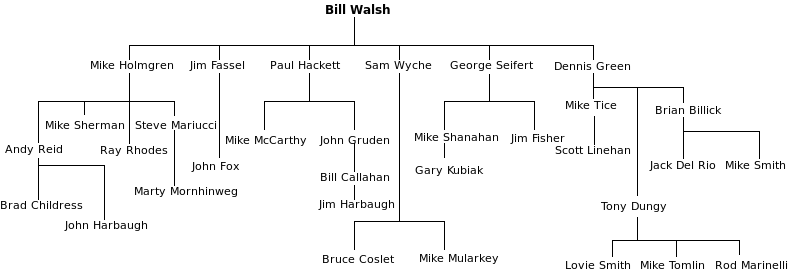
The offense was created by legendary 49ers head coach Bill Walsh, whose success is matched only by his simply incredible coaching tree that he has amassed, with Walsh, Dungy, Billick, Holmgren, Harbaugh, Gruden, McCarthy, and Shanahan all winning Super Bowls:

791px-Bill_Walsh_Coaching_Tree

(Side note: anyon else notice how many times Jeffrey Lurie seems to be going back to this well? His first hire as a head coach was Ray Rhodes, who coached in San Francisco under Walsh. His next hire? Andy Reid, who was schooled in Bill Walsh’s ways by Mike Holmgren in Green Bay. The Eagles reportedly targeted John Harbaugh, another Reid disciple, before interviewing Pederson (Reid), Ben McAdoo (who came up under McCarthy in Green Bay), Duce (Reid) and Pederson (Reid). Not sure what this means long term, but figured I would pass it on).

The west coast offense is predicated on short passes — think slants, bubble screens, and crossing patterns — with three step drops. The offense is designed to get plays out of the quarterbacks hands quickly and into the hands of the playmakers looking to get YAC. And often times, the offense will use the short passing game in lieu of the run.

Of course, the West Coast offense is an amorphous scheme — each coach that has inherited it from Bill Walsh has put his own spin on things — so don’t expect Pederson to run the exact same offense that Reid ran here.

But looking at the Chiefs offense will still provide us some clues as to what we can expect. While there are a lot of similarities between the offense Reid ran in Philly and his current offense in Kansas City, there are some noticeable differences as well. For starters, Reid has relied more heavily on the running game since he moved to the Chiefs. Below is the percentage of pass plays ran since 2013 and their rank compared to the rest of the NFL:

2015: 53.49% (27th)

2014: 56.34% (24th)

2013: 57.31% Pass (19th)

For comparisons sake, Reid passed on average 60% of the time from 2003 to 2012,  which ranked 8th in the NFL  (I could not find statistics for 1999-2002).

The other stark difference is how the Chiefs have embraced some new age spread concepts, which is why you will see them run some read option plays.

AJ Feeley recently described Pederson as a “new age West Coast” coach, which is an encouraging label. The NFL’s new passing rules favor the downfield passing game, leading many to question whether the West Coast offense, which is predicated on the horizontal passing game, is outdated.

If Pederson is able to marry the West Coast principles with the new age spread concepts that his predecessor Chip Kelly used to success, we could be onto to something. I know many are at the point during the breakup from Kelly where everything he did seems toxic.

But we would be foolish to dismiss the positive change he brought to the game: combining vertical and horizontal passing concepts with an up-tempo offense and simplified verbiage used for calling plays. This approach has been adopted to varying degrees across the league, including in New England (especially), Denver, Seattle and Carolina, all of whom played football games over the weekend.

It is the familiarity with the spread offense that makes me inclined to want Pat Shurmur to stay on as the offensive coordinator. Anyone that watched the Chiefs burn through timeouts and handle their two minute offense at a snails pace on Saturday night were quickly reminded how frustrating the time management — or lack thereof — was during the Reid era.

There are least two causes for these issues. One, Reid has an inefficient system in place for calling plays. As Reid acknowledged to the Kansas City Star, he calls the plays to Pederson, who then relays them to quarterback Alex Smith.

Add to it the complicated verbiage that is used for each play, such as “shift to halfback twin right open, swap 72 all-go special halfback shallow cross wide open,” and it is easy to see why the Chiefs struggle to manage the clock effectively, especially when compared to the one or two word play calling used by Kelly and Belichick.

Keeping Shurmur on board would provide for a good mix of the West Coast and spread offense concepts and give the Eagles the opportunity to improve on the limitations that are still plaguing Reid.

The Offense’s Strength Lies In Its Efficiency

A final thought on the Chiefs’ offense — and by implication, Pederson: don’t be fooled by total numbers. The Chiefs rank 27th in total yards, 30th in passing yards, and 6th in rushing yards. Compare that to the Eagles, who ranked 12th in total yards, 12th in passing yards, and 14th in rushing yards, in what many would consider a down year, and it’s easy to think that the Eagles are taking a step back offensively by switching to Pederson.

But that is prime example of why total numbers can be misleading. The Chiefs offense was highly efficient this year: they were 9th in points per drive according to FootballOutsiders.com, and 19th in yards per drive. (The latter statistic would be even better if the Chiefs did not have the best average starting field position in the NFL, again according to FootballOutsiders.com).

And the Chiefs offense was efficient in 2014 as well, where they ranked 12th in points per drive, 8th in starting field position, and 20th in yards per drive (again, the latter of which is dragged down by their great field position).

Compare that to the Eagles, who were the model of inefficiency in 2015, ranking 23rd in yards per drive, 19th in points per drive, and 25th in starting field position.

Why the disparity in total numbers versus efficiency? Two reasons: the Eagles were propped up by the fact that they ran more plays than most teams in the league, thus giving a false perception that they were a good offense when in fact, they were not.

Second, the Chiefs were much better at protecting the football (which is, at least in part, a byproduct of the risk adverse west coast offense predicated on shorter passes): they ranked 2nd in 2015 in turnover differential with a plus-14, compared to 22nd for the Eagles, with a negative 5.

Big Picture Take Away

I will address later this week why there are legitimate concerns about the Eagles front office and ownership, but we should do our best to compartmentalize those concerns and not let them impact our view of Doug Pederson. We have no idea how his tenure will turn out because there are so many unknown variables in the equation. But we do know that Pederson his highly respected around the league, runs a blend of the West Coast offense with new-age spread principles, and has spearheaded one of the most efficient offenses in the league over the last two years.

Scouting Adam Gase

http://www.gettyimages.com/detail/news-photo/offensive-coordinator-adam-gase-of-the-chicago-bears-looks-news-photo/502856292


Patrick Causey, on Twitter @pcausey3

With multiple reports suggesting the Eagles are set to aggressively pursue Bears offensive coordinator Adam Gase, and one report going as far as saying the Eagles have offered him the job, I decided to dig into Gase’s background and the type of offense he will bring to the table.

Almost intuitively, the first thing I noticed was the differences between Gase and his predecessor, Chip Kelly. This same thing happened when Kelly was hired. Many celebrated the fact that Kelly was a run first coach who liked big defenders. As Kelly was known to say, “big people beat up little people.” This was a breath of fresh air after 14 years of Andy Reid giving up on the run with reckless abandon and relying on undersized defenders who could “fly to the football” (but not make the tackle, of course).

So I have a feeling many Eagles fans will appreciate some of the things that Gase brings to the table that were perceived weaknesses for Kelly: Gase has a pro background (for whatever that is worth), he has shown a willingness to adapt his offense to fit his personnel, he has a great track record with quarterbacks, and he strikes the proper balance between holding players accountable but also maintaining close relationships.

Let’s break these down further.

From Saban’s Protegee to Cutting His Teeth With Brilliant Offensive Minds

Here’s something that will become a punch line if the Eagles hire Gase and things do not go smoothly: Gase has never played college or professional football. Oh, just imagine the calls to WIP and 97.5 The Fanatic after a three game losing streak…

But I digress. While Gase lacked the playing experience, he cut his teeth among some of the best coaches in the game.

Gase attended Michigan State University while Nick Saban was the coach and was able to work under Saban as a student assistant coach. When Saban left for LSU in 2000, Gase was the only assistant coach that he brought with him, a telling sign about the level of respect Saban had for Gase. “It was a conceptual thing with Adam, he just understood how things worked and he was willing to work and start from ground zero,” Saban said in an email to the New York Times.

From there, Gase spent the next 13 years bouncing around the NFL with the following jobs:

  • 2003-2007: Detroit Lions, scouting assistant, offensive assistant, and quarterbacks coach
  • 2008: San Francisco 49ers: offensive assistant coach
  • 2009-2014: wide receivers coach, quarterbacks coach, offensive coordinator
  • 2015: Chicago Bears: offensive coordinator

Along the way, he has worked with coaches that abide by a variety of offensive philosophies: the west coast system under Steve Mariucci, the Don Coryell-based digits system under Mike Martz, and the offense Peyton Manning ran to great success with the Indianapolis Colts.

An Ever Evolving Offensive Scheme that Adapts to his Personnel

It was that diversity of experience that shapes Gase’s offensive scheme now, which you cannot neatly fit into one package.

Looking over film of the offenses that Gase ran in Denver and Chicago, you see concepts from a number of different offensive systems. One minute the Broncos or Bears would call a Peyton Manning staple: the dig concept; the next, it’s a West Coast offense staple with the quick slants; and the next minute, its deep vertical passes from the Mike Martz/Air Coryell school of thought. Mixed in, you see some bubble screens, and of course, even a little no huddle, up-tempo offense (but relax, Eagles fans, it is used sporadically, not as an overriding philosophy).

The fact that Gase has married so many different passing concepts into one hodgepodge of an offense speaks to one of his greatest strengths: his ability to adapt to his personnel.

As Gase explained to Jenny Vrentas of SI.com: “The most important thing that I have learned in this whole experience since 2011 is every guy is different and you need to adjust your offense to who you have. Every team is functioning around the quarterback.”

To say that Gase has worked with a diverse set of quarterbacks would be an understatement. From the run first, throw third approach of Tim Tebow, to the statuesque pocket passer of Peyton Manning, to the middle ground provided by Jay Cutler, Gase has seen it all.

At each stop, he modified his offense to maximize what his quarterback did best. With Tebow, it was a run first offense with simple passing concepts and designed quarterback runs to mask Tebow’s obvious flaws. The Broncos lead the NFL in rushing attempts with 546, while ranking dead last in passing attempts with 429.

When the Broncos acquired Peyton Manning in 2012, the Broncos nearly flipped the script, passing 588 times to 481 rush plays. Of course, passing more with Manning than Tebow doesn’t take a rocket scientist. But Gase quickly developed Manning’s trust with his football acumen and untiring work ethic. Manning called Gase “the smartest guy I know” who has a “photographic memory.”

http://www.gettyimages.com/detail/news-photo/denver-broncos-offensive-coordinator-adam-gase-has-a-word-news-photo/459468754


When Mike McCoy became the head coach of the San Diego Chargers in 2013, Gase was promoted to offensive coordinator. He revamped the Broncos offense to incorporate more of the passing concepts that Manning was familiar with and used to great success in Indianapolis.

One such play, the “dig” concept, has been Manning’s bread and butter since he entered the league. Photo courtesy of Chris Brown at Grantland.com:

grant_h_dig_diagram_sl_64011

The dig concept was simple: the outside receiver runs a five-yard in-route, while the inside receiver runs a deep in or dig route. On the opposite side of the field, the outside receiver runs a go route, with the inside receiver running a “read-seam” that breaks depending on whether there is a single high or two deep safeties.

Manning ran this play up to 10-20 times a game with minor variations (wait — you mean an offense can be predictable but successful as long as players execute?! What a novel concept!). While it was used in 2012 under McCoy, Gase relied on it even more, as well as other concepts that Manning was accustomed to. Needless to say, it worked: the Broncos rode the most prolific offense in NFL history to a Super Bowl appearance.

But it’s not just offseason adjustments; Gase has also shown a proclivity for making mid-season and mid-game adjustments. In week 11 of the 2014 season, the Broncos offense hit a standstill. Touchdown machine Julius Thomas suffered an ankle injury that hampered his production and Manning’s arm strength was becoming problematic, especially as the weather got colder.  The Broncos had lost two of three, including an embarrassing 22-7 drubbing at the hands of the St. Louis Rams.

So Gase abandoned the pass heavy approach in favor of a more dominant rushing attack, often using six offensive lineman and relying on C.J. Anderson’s fresh legs to carry the heavy workload.  Manning went from averaging 40.7 pass attempts per game to 31.6, and the offense flourished. The Broncos ended the season winning five out of their last six games en route to a 12-4 record.

It is this versatility and intelligent play calling that led Mike Martz to call Gase one of the three best offensive minds currently coaching in football (if you have not already read that piece, I highly recommend it). John Fox said Gase was “a master of innovation” and John Elway, the Broncos president, called Gase a “genius.”

Gase’s versatility will likely be a selling point to Jeffery Lurie and Howie Roseman. Kelly seemed hellbent on fitting players to his system instead of the other way around. Gase takes the opposite approach, catering his offense to his personnel and the circumstances, and has done so to great success.

Improving Jay Cutler

With Adam Gase as the quarterbacks coach, Tim Tebow led the Broncos to an 8-8 record and a wild card playoff win. The record setting offense of 2013 was Gase’s best statistical accomplishment. And his work in 2014 was a good example of how Gase can adjust on the fly.

But perhaps his best work has been his reclamation project of the enigma that is Jay Cutler. Cutler was once considered one of the best young quarterbacks in the NFL. But over the last six seasons, his bad habits are matched only by his bad reputation, with many around the league considering Cutler a lost cause.

But Gase worked with Cutler on limiting his turnovers and making smart decisions under pressure. And he tailored the offense and his play calling to effectuate that goal: providing Cutler more time to examine the defense at the line of scrimmage and calling more pass plays that called for Cutler to get the ball out quickly.

Under Gase, Cutler has played some of the best football of his career. Consider this: Cutler’s career DYAR and DVOA efficiency ratings, per FootballOutsiders.com: 25.88 and 20.55, respectively. (His DYAR high was 4, with a low of 33; his DVOA high was 4, with a low of 30).

But this year? Cutler ranks 10th in DYAR and 13th in DVOA. He hasn’t had numbers that high since his third year in the league (2008), when many saw Cutler as the second coming of Brett Farve. He has a career high in passer rating (92.3) and the second best interception rate (2.3%) of his career. And all of this was accomplished with his top four receivers — including Pro Bowl talent Alshon Jefferey — missing a combined 31 games.

http://www.gettyimages.com/detail/news-photo/jay-cutler-of-the-chicago-bears-warms-up-in-the-pregame-news-photo/502085342

In a league starving for quarterbacks, one of Gase’s strongest selling points will be his success with each of the quarterbacks he’s coached. From Tebow, to Manning, to Cutler, each have benefited from Gase’s tutelage. And with the Eagles facing uncertainty at the position, bringing in a coach with experience in getting the most out of whoever their quarterback is — be it Sam Bradford or a high draft pick — will be critical.

Balancing Interpersonnal Relationships with Holding Players Accountable

One of the strongest criticisms leveled at Kelly was his inability to connect with his players but also hold them accountable. It is not an easy task; it requires striking the proper balance between developing close ties with your players while holding them to a high standard.

As Adam Jahns of the Chicago Sun Times details, Gase has found that proper balance with his players:

He’s all about accountability,” Slauson said. “He expects guys to do what they’re supposed to do. He holds guys to a very high standard.

“As offensive linemen, we’ve got to be on the correct guys using the correct technique. He’s always hammering that home all the time. He doesn’t let anything slide.”

But there is a “working relationship,” receiver Marc Mariani said. A dialogue exists with players, particularly with quarterback Jay Cutler, who has a career-best 92.8 passer rating.

“That’s what has made him successful in the coaching business,” Mariani said. “He commands the room, but he engages his players and he has great relationships with all of us.”

It’s that ability to connect with players while pushing them to achieve their potential that has resonated most with his players. Anyone that has followed the fallout from Chip Kelly’s firing will understand that the Eagles are looking for this ability from their head coach to rebuild the cohesion that is missing in the locker room. Gase seems to have that ability, assuming it can translate over to the entire time.

Big Picture

As with any coaching candidate, uncertainty remains. How much can we credit Gase for the Broncos success under Peyton Manning? How much credit does Gase deserve for “turning Cutler around” when the Bears finished the year 6-10? Even if Gase is the quarterback whisperer and a brilliant offensive mind, can he oversea an entire team and build a respectable defense?

These are all valid concerns and questions that Gase must answer during his interview with the Eagles. But based on my review, I think the Eagles could do a lot worse than hiring Gase. In fact, I think he is their best bet.

On Chip Kelly, Howie Roseman, and What This Move Means for the Eagles Moving Forward

http://www.gettyimages.com/detail/news-photo/philadelphia-eagles-owner-jeffery-lurie-talks-to-general-news-photo/454304670

Patrick Causey, on Twitter @pcausey3

I’m writing this post in-between chasing two sick toddlers around, so it won’t be the most coherent article I’ve written. But I wanted to get some thoughts down on the Chip Kelly move and what it means for the Eagles franchise moving forward.

Kelly the GM Played a Huge Role in This

I was against vesting this much power in Chip Kelly from the start (read here), because giving a head coach this much control rarely works out, especially when that coach is an NFL neophyte. As I wrote back in January, for every Bill Belichick, there are 10+ coaches that could not handle the joint responsibility of building the team and coaching it.

My concern became exasperated when Kelly’s personnel moves started rivaling those made by the Daniel Snyder led Washington Redskins of the early and mid 2000s. Paying DeMarco Murray and Byron Maxwell like top five players in their respective positions were mistakes before the ink dried on their contracts. Murray was an aging running back (yes, 27 is old for a RB) coming off a historic usage rate. Maxwell was a good number two option at cornerback whose physical limitations were masked by playing along side three All Pros in the secondary. Expecting them to validate their contracts was a fool’s errand. Not resigning Jeremy Maclin, trading LeSean McCoy for Kiko Alonso, and signing Miles Austin, all hastened Kelly’s departure from the Birds.

The moves that he did not make to shore up the interior of the offensive line — for nearly three damn seasons — proved to be especially problematic. For an offense predicated on establishing the inside zone run, relying on two career backup guards seemed like managerial malpractice.

But perhaps Kelly’s biggest mistake was his misallocation of resources. To Kelly’s credit, he used some of the limited resources at his disposal to address holes on the team: quarterback and the secondary, primarily. But Kelly created new holes at wide receiver and running back and filled them with substandard parts. By focusing on areas of strength, it robbed him of the opportunity to shore up the offensive line. The net effect of this misguided approach was a team going from 20-12 to 6-10 or 7-9, and was a chief reason for Kelly no longer being in charge of the Eagles.

But Kelly the Coach and Person also Played a Part in His Demise

Tommy Lawlor was prophetic this morning when he discussed how Kelly failed to build sustainable relationships inside the NovaCare complex, a critical but often overlooked aspect of coaching. That view was confirmed by Jeffrey Lurie, who took a thinly veiled shot at Kelly for failing on the interpersonal relationship front, not only with his team, but also the city:

https://twitter.com/InsdeTheHuddle/status/682258890172559360

In a sad twist of irony, the coach that obsessed over building and maintaining a positive culture failed to grasp his central role in fostering it.

And of course, Kelly failed on the X’s and O’s at times as well. He never got away from his constant pace on offense, which led to too many mental errors and wore down his defense. And in his effort to simplify the offense for Bradford — who was still recovering from knee surgery and learning the Eagles system — he became too predictable. Gone were the days Kelly’s phrenetic pace was married with packaged plays to create an offense that seemed destined for greatness. As Bill Barnwell of ESPN.com (formerly Grantland.com) described following Kelly’s debut win over the Washington Redskins three year’s ago:

Those packaged plays represent the newest form of option football. The Eagles aren’t just running the read-option like Washington did a year ago. They’re running the read-option, plus a bubble screen on the outside, plus a stick route up the seam, and they’re doing it all on the same play. Naysayers and read-option doom-mongerers miss the point; even if there was some simple way to defeat the read-option (and there’s not), all you would accomplish in doing that would be to open up advantageous situations for the receivers on the outside of the field. You can try and try and try to stop everything in these situations, but you’re going to find it awfully difficult to stop three plays at once if you don’t know what’s coming.”

The over simplification of his offense, coupled with his player personnel mistakes, had a ripple down effect on the entire offense. Unable to establish the inside zone run — the one area DeMarco Murray was supposed to excel — the Eagles became far too lateral in their rushing attack. And the passing concepts became boiled down to the simplest terms, with Kelly abandoning packaged plays in order to make things easier on Bradford. The scaled down attack created easy pickings for defensive coordinators, and Kelly did not have enough talent to adjust thanks to his personnel blunders .

Had Kelly adjusted in time — slowed the hell down, expanded the playbook, adjusted his play calling and formations — it might have changed the outcome of the Eagles season. He didn’t. At least not fast enough for his players or Lurie. So here we are.

With that said, I would not have fired Kelly

It is hard to say with any degree of certainty that Lurie made a mistake firing Chip Kelly because it is impossible to know what truly was going on inside the NovaCare Complex. Yes, stories are trickling out that Kelly was a benevolent dictator. But these stories should be taken with a giant grain of salt, because they provide executives and players a convenient excuse for not holding up their end of the bargain. So without that firsthand account, we are left to draw imperfect conclusions based on imperfect information.

But that said, this just feels like the wrong decision. Yes, Kelly had an ego the size of Texas and was difficult to deal with. But name me one NFL coach who isn’t.

Tom Coughlin was nicknamed “Tyrannical Tom” because he was controlling, hypercritical and had arbitrary requirements like making players wear suits on game day, keep short haircuts, and arrive five minutes early to meetings.

Bill Belichick had alienated the veteran players, the hyper-loyal fans, and the media in Cleveland because of his smugness and inability to connect. Upon firing Belichick, Art Modell said he might have stayed in Cleveland if he had never hired Bellichick: “I was sold a bill of goods on Belichick. To Bill, everything was like the Normandy invasion. I couldn’t talk to him during practice because he was coaching. I really believe that much of the disdain and abuse I received was because of the feelings the media and the public had for Bill. Every day I thought it would change, that he would be more pleasant to people. He never did and it hurt all of us terribly.”

Josh McDaniels, the Patriots offensive coordinator being linked to the Eagles by some, had an oversized ego that made Chip Kelly look like Mother Theresa. Consider this story from former Broncos general manager Ted Sundquist:

“Shortly after Josh McDaniels moved into his office at Dove Valley, he called in Cutler and his agent, Bus Cook, for a closed-door meeting. The story goes that McDaniels began with a 20-minute dissertation of his resume, how he’d worked his way up the ranks in New England to become Bill Belichick‘s right-hand man with the offense and how the team would have been nowhere the year before without his tutelage of backup Matt Cassel. He continued on with justification of his hiring by Bowlen. 

After the perplexing recitation of accomplishments, McDaniels suddenly shifted gears.

He began to bash and berate Cutler and his game to the tune of a verbal flogging neither had ever witnessed. The expletive-laden diatribe went on for a few minutes, after which Cook stood up and told Cutler they were leaving. As they walked down the long hallway past Bowlen’s office, Cutler turned to Bus and said, “Get me out of here. I don’t care how you do it.”

Boiled down, every coach has flaws. The most successful ones are able to overcome their flaws and succeed despite them. And once the coach starts winning, the ego — which was so problematic during dire times — becomes much more bearable.

While Kelly did not adjust quickly enough this year, I thought he deserved at least one season to prove that he was capable of adjusting. Because make no mistake, Chip Kelly was a good coach. Winning 20 games in your first two years is not an easy thing to do, especially when you do not have a franchise caliber quarterback.

And while this season was undoubtedly a disappointment, Kelly’s record in his first three seasons compared favorably to NFL coaching greats:

  • Chip Kelly: 26-21
  • Sean Payton: 25-23
  • Bill Belichick: 20-28
  • Chuck Noll: 12-30
  • Pete Carroll: 25-23

Obviously, winning 26 games in his first three years does not mean that Kelly will turn out better than these coaches. But finding a head coach capable of enjoying the level of success that Kelly achieved is no small order. And the Eagles kicked him to the curb without affording him the opportunity to learn from his mistakes.

Firing Chip Kelly wasn’t the only option available. While it might not have been accepted, or even preferred, Lurie could have offered Kelly the opportunity to stay on as head coach without the personnel control. Or, he could have brought in a senior advisor much like the Sixers did with Jerry Colangelo. He could have at least tried these things before pulling the trigger. But Lurie acknowledged that he did neither of those things,  and only time will tell if he was right.

From my perspective, it seems that Lurie’s desperation to win a Super Bowl and refusal to part ways with Roseman is leading to rash decisions. And firing Chip Kelly three years in is chief among them.

Lurie should have fired Roseman

Speaking of which, if Lurie was intent on cleaning house, he should have fired Howie Roseman as well. Instead, he is putting Roseman back in charge of the personnel department, albeit under a loosely defined structure that requires more collaboration.

https://twitter.com/InsdeTheHuddle/status/682257342507921408

Looking back over Roseman’s track record as GM yields a mix bag of results. He had a role — albeit an undefined one — in the disastrous 2010 and 2011 drafts. But he also played a large part in the 2012 and 2013 drafts, which were resounding successes by most measures. And as a friend of the blog @sunset_shazz stated yesterday:

But my issue with Roseman is not so much his track record in selecting and acquiring players. Limiting your focus only on that half of the equation ignores the critical role that fostering a stable and healthy environment in the front office plays in the success of an NFL franchise. In other words, it would be like judging Kelly solely on his wins and loses and not his ability to connect with his players.

Both elements are important, and it is becoming harder to ignore that Roseman utterly fails in the latter regard. As Mark Eckel of NJ.com reported, Kelly played a key roll in Kelly’s firing: “According to several league sources, the firings have Roseman’s fingerprints all over it“I can’t believe it,” a long-time executive for an Eagles rival said when told of Kelly’s firing. “They did what? Are you serious? No, you’re kidding right? You can’t be serious.” When he finally realized it wasn’t a joke, he put the onus on the former and probably future general manager. “Howie got him,” the executive said. “He won. It took him some time, but he got to the owner, and he won. That’s just amazing. What is Lurie thinking? That place is just out of control.”

Kelly and Marynowitz join a long list of executives and coaches shown the door after clashing with Roseman: Reid, Banner, Louis Riddick, Tom Gamble, to name a few. According to a report from CSNPhilly’s Reuben Frank, this is because Lurie sees Roseman as “a messiah” who “can do no wrong.” Add to it the comments from Louis Riddick, who lambasted Roseman for creating a “toxic environment” inside the NovaCare Complex, and it is easy to see why the Eagles have had such a hard time sustaining any modicum of consistency since Roseman has ascended to power.

Suffice it to say, unless and until Roseman is removed from there, permanently, we should expect more of the same turmoil with the Eagles.

Finding a New Coach Won’t be easy

I talked about this on Twitter earlier this morning, but the Eagles are a less than attractive option right now for top head coaching candidates. Consider the following:

  • The quarterback position is a mess;
  • The aforementioned Howie Roseman front-office drama;
  • They lack a second round pick;
  • Their cap situation is less than ideal, with significant money owed to Byron Maxwell and DeMarco Murray next year; and
  • They will likely be competing with the following openings, all of whom have good quarterbacks in place: Titans (Mariota), Colts (Luck), Chargers (Rivers), Giants (Manning).

Add all of this up, and I will not be shocked if the Eagles are left standing at the alter by their preferred coaching candidate. Right now, the Eagles just aren’t an attractive destination, and that fact is made worse by the other, likely more desirable jobs that are available.

Do not expect Bradford back

A final thought: if Kelly was staying with the Eagles, I thought there was an 85% chance that Sam Bradford would be back next season as well. Kelly invested heavily to acquire Bradford, and spoke glowingly of his quarterback’s progress over the last few weeks.

But now? The waters are completely muddy on this issue.

Like Kelly, the new coach might be enamored with Bradford’s skill set. He might look around the league, see a dearth of quality options in free agency and the draft, and decide to re-sign Bradford until he can draft his guy.

But new coaches in the NFL are notorious for bringing in “their guys” (no, Kelly wasn’t the only coach who abided by this philosophy), and that usually starts at the quarterback position. And with the Eagles teetering close to a top 10 pick, I think there is a good chance that we see Bradford plying his trade somewhere else (Houston? Cleveland? San Francisco?), and the Eagles turning to the draft to solidify the quarterback position.

And while I still need more time to go through the tape of quarterback prospects, one name to keep an eye on is California’s Jared Goff. He has struggled at times this season with his consistency, but he is also capable of turning in eye-popping performances, like his 6 touchdown game in a win over the Air Force:

But I digress. We can talk quarterback later. For now, we are left wondering if Lurie made the right move. And what could have been if Kelly was given more of an opportunity to succeed.

Sam Bradford’s Improvement

http://www.gettyimages.com/detail/news-photo/quarterback-sam-bradford-of-the-philadelphia-eagles-throws-news-photo/502140066

Patrick Causey, on Twitter @pcausey3

I have broken down Sam Bradford’s performance twice this season: once after the Eagles win over the New York Jets, and about a month later after the Eagles beat the New York Giants.

After the Eagles win over the Jets, I concluded that Bradford was playing poorly across the board: making bad reads, not letting plays develop, and delivering the ball inaccurately.   After the Giants win, it was clear that Bradford was still struggling in these areas, and also struggled throwing under pressure and maintaining his mechanics. A lot of these issues persisted in St. Louis, which raised doubts about whether it was reasonable to expect Bradford to overcome them. But, with hesitation, I concluded that Bradford deserved more time to develop confidence in his knee and a comfort in the Eagles system.

So now seems like a good time to check back in on Bradford’s development. But before we do, let’s play a guessing game.

Pick which quarterback you want on your team:

https://twitter.com/InsdeTheHuddle/status/679650782413766657

Quarterback B is obviously Sam Bradford’s numbers this year.

Quarterback A? Carson Palmer in 2013, his first season in the Arizona Cardinals’ system.

It is by no means a perfect comparison, as Brian Solomon and Dave Mangels pointed out in our lengthy discussion on Twitter, but it is — to a certain extent — illustrative of the effect learning a new system can have on a quarterback.

Chip Kelly echoed this point a few weeks back, quote courtesy of BleedingGreenNation.com: “I think Sam, as a whole, has progressed as the season has gone along. I know it takes a long while to play quarterback in this league. There’s so many different things you have to get. And when we got Sam, we knew with any quarterback it’s going to take time. Name any quarterback playing at a really high level now and they’ve been playing in the same system for years, not for months. And that’s Sam’s case is. He’s just been playing in our system for months.”

Breaking down the tape over the last three games — with wins over the Patriots and Bills, and a loss to the Cardinals — lends support to Kelly’s point. Without question, last Sunday’s performance against the Arizona Cardinals was his best of the season, which came on the heels of two good — but by no means great — performances against the Bills and Patriots. And while there are still valid questions about why Bradford’s improvement is not translating to more points from the offense (which I plan to address later this week), it is clear that he has improved in the areas I consider most critical for being a successful NFL quarterback: accuracy, throwing under pressure, working through his progressions, manipulating defenses, and operating effectively within the pocket.

Let’s break it down further.

Accuracy

Delivering the football accurately from the pocket is arguably the most important skill a quarterback can posses. When the Eagles acquired Bradford in the offseason, reports emerged that the Eagles coaching staff believed Bradford’s accuracy compared to Peyton Manning and Kurt Warner, while his teammates compared his quick release and accuracy to Aaron Rodgers (chuckle).

But once the games went live, Bradford’s accuracy went out the window. One of the primary issues was Bradford’s faulty mechanics, which led to a lot of passes missing their intended mark:

Of course, Bradford was off by a mile with this throw. The accuracy required to be successful at the NFL level is much more precise than even that.

Consider this throw to Miles Austin (RIP) against the New York Jets:

Bradford needs to lead Austin, but instead throws it a good six inches behind him, which allowed the defender to make the play.

But now, we are starting to see that accuracy in practice and at training camp translate onto the field. Perhaps his best throw of the year came against the Arizona Cardinals, when he delivered the perfect back shoulder throw to Brent Celek:

Here is a better angle:

Against the Buffalo Bills, I thought Bradford’s best pass of the day actually resulted in an interception. No, you read that right, that was not a typo. Bradford’s pass to Brent Celek deep in the red zone was a perfectly thrown pass with enough touch and accuracy to split the linebacker and safety bracketing Celek:

The only problem, of course, is that Celek got outmuscled for the football by a spectacular play from Leodis McKelvin. Of course, we cannot fault Bradford for this — or at least we shouldn’t. It was a great pass and another example of his improved accuracy with the football.

Under pressure

For the majority of Bradford’s career, including the first half of this season, Bradford has struggled to throw under pressure. It was the one achilles heel that I was not sure Bradford could ever get over. Here is a chart showing his numbers throwing under pressure, with the ranks in parentheses:

Year Cmp% TD INT
2010 41.1 (23/29)* 4 (T-18) 7 (T-5)
2011 38.4 (23/24) 6 (21) 2 (22)
2012 41.6 (20/27) 5 (11) 2 (T-23)
2013** 38.8 (26/29) 2 (T-12) 1 (T-21)

It’s why we saw bad throws like this against the Atlanta Falcons:

Bradford’s mechanics are all over the place here: his feet are too far apart, and he shorts his release to get rid of the ball before he is hit. The only problem? He didn’t see the underneath defender, who jumps in front of the softball Bradford just lobbed for an easy interception deep in the Eagles territory.

When I originally wrote this article back in October, Bradford’s numbers were staying true to career form: his 44.6 completion percentage ranked 26th of 31 qualifying quarterbacks, and his 4 touchdowns and interceptions ranked 2nd and 3rd worst overall.

But now? Somewhat amazingly, Bradford ranks 1st overall throwing under pressure according to PFF.com. His 73.9 accuracy percentage (completions + drops counted as catches) ranks first in the NFL. His 56.3 completion percentage ranks 6th. That is a drastic improvement in such a short period of time.

One of his best throws under pressure came on 3rd and 11 with 2:49 left in the game against the Patriots. The Eagles were clinging to a touchdown advantage, but momentum had clearly swung in the Patriots favor..

The safe call here is to run the ball. It likely would have given the Patriots the ball around the 2:00 warning deep in their own territory. But Kelly trusted his quarterback (or didn’t trust his defense to stop Brady…. or both), and the move paid off:

Jason Peters deserves credit for the late block which made the play possible. But watch how Bradford navigates the pocket despite the pressure coming from three different spots to deliver a strike to Cooper for the critical first down. We just weren’t seeing that consistently earlier this year or when Bradford was at St. Louis.

Against the Cardinals, Bradford shined throwing under pressure, completing 9/11 passes, 81.8%, for 1 touchdown and 1 interception. He repeatedly connected with his receivers when the defenders were bearing down on him, especially on third down.

Consider this throw to Josh Huff for a first down with Bradford backed up deep into his own end zone

The Cardinals ran a stunt with their defensive line, springing Marcus Golden free. Kelce was too late and Sproles was unable to get a clean block, giving Golden a free shot on Bradford. But Bradford stepped into his delivery and made an impressive throw to Huff for the first down, 25 yards down the field.

On another third and long, the Cardinals again used a stunt up front to bring pressure on Bradford, but he was able to hit Jordan Matthews for the first down:

Bradford’s injury history is an obvious impediment to a long term deal, or at least it should be. But Bradford’s toughness should not be  in doubt. Despite taking a beating over the last three weeks, he has stood tall in the pocket and delivered accurate throws to his receivers.

Avoiding Checking Down Too Early

Earlier in the year, we discussed how Bradford was checking down far too often, which left the opportunities for big plays on the field. This was a consistent problem throughout Bradford’s career, as the significant majority of Bradford’s passes were less than 10 yards from the line of scrimmage, as you can see from this chart below:

Year Percentage
2015 65%
2013 74%
2012 69.5%
2011 65%
2010 74%

Prior to this year, 70.62% of Bradford’s passes traveled 10 yards or less on his career. While 65% this year isn’t a significant drop, it is an encouraging one, especially when coupled with what we are seeing on the tape.

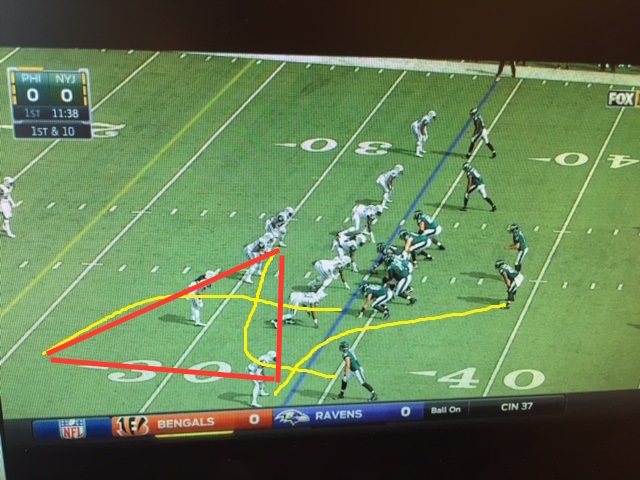
But let’s take a step back for a minute and look at what we saw from Bradford earlier in the year. Take this simple triangle concept that is a staple of Chip Kelly’s offense. Riley Cooper is running an underneath drag route, Ryan Mathews is running an out route out of the backfield, and Brent Celek is running a corner route.

ertz-missed 1

The route concept is called a triangle route because it gives the quarterback three defined reads to make on the play, all of which form the shape of a triangle.

Watch how quickly Bradford — without being under pressure —  checks down to Mathews here.

Bradford’s inaccurate throw was made worse by Brent Celek breaking wide open on the corner route. Had he held onto the ball for just a hair second longer, he could have connected with Celek for a huge gain:

Ertz 3

During his time in St. Louis, Bradford averaged a paltry 6.3 ypa. That number has risen this year to 6.91 ypa; an improvement no doubt, but it still ranks 26th of 35 qualifying quarterbacks, according to ESPN.com.

However, over the last three weeks we are seeing Bradford give his receivers more time to get open to make a play downfield. Not all of them have connected, which explains why Bradford’s ypa remains in the pedestrian range of 7.1 over the last three weeks, per PFF.com.

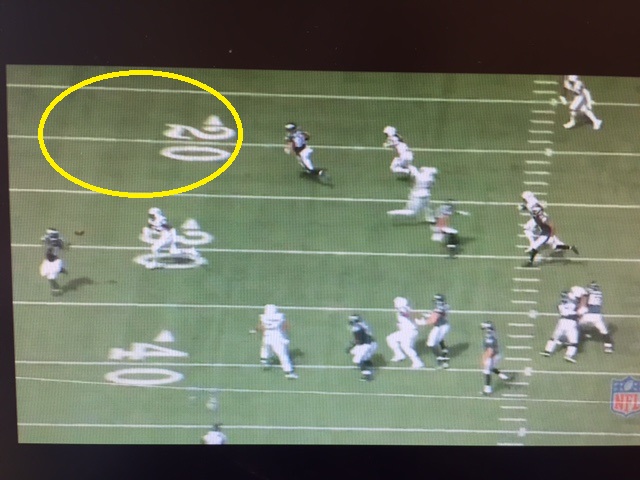
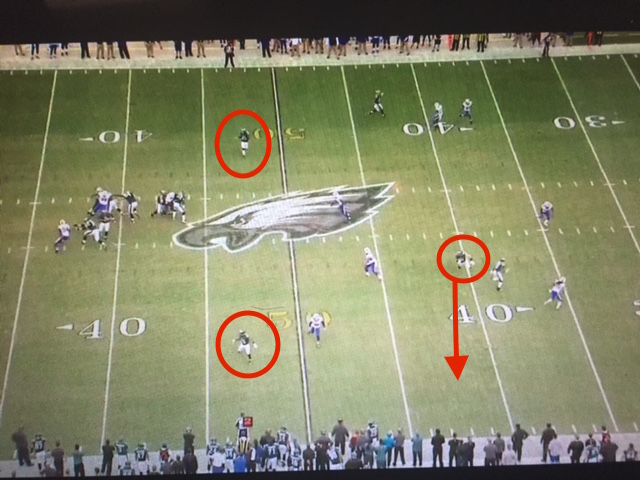
The most obvious example was the deep touchdown pass to Nelson Agholor against the Buffalo Bills:

Watch how Bradford maneuvers in the pocket while keeping his eyes down field. Here is a closer view:

You might have noticed in that clip that most of the underneath routes were open on this play:

IMG_2563

Despite being under pressure and having to navigate the pocket, Bradford did not check down or give up on the play too early, something he likely would have done in the same circumstance earlier this year.

Chip Kelly’s scheme is most effective when he is stretching defenses horizontally and vertically. It prevents defenses from dropping a safety in the box to shutdown the anemic run game and gives the underneath crossing routes more room to breath. Bradford can go a long way towards helping to unclog that congestion by taking even more shots down field.

Manipulating defense

Final good area before touching on a few topics that need to improve. Some of the best quarterbacks in the NFL — Aaron Rodgers, Tom Brady, Drew Brees, to name a few — manipulate defenses with their eyes to create openings in the passing game.

We are starting to see Bradford do the same thing. One of the first times I saw it all year was against the Carolina Panthers, which was around the time that Bradford’s play started to improve overall. Watch as he manipulates All Pro linebacker Luke Kuechly with his eyes to open up the passing lane to Jordan Matthews:

We saw another example with Sam Bradford’s touchdown throw to Zach Ertz against the Cardinals. The Eagles send Cooper, Ertz and Celek on vertical routes, attacking the defenses down the seams. This play puts Cardinals safety Tyrann Mathieu in a bind: he has to choose whether to provide help on Celek or Ertz.

Bradford focuses on Celek which forces Mathieu to provide help over the top, but Bradford quickly pivots and delivers a strike to Ertz for the touchdown

Here is a close up so you can see how Bradford uses his eyes:

These are one of the traits that separate the mediocre quarterbacks from the very good and great ones. While I am obviously not comfortable putting Bradford in the very good category yet, it is an encouraging sign to see him making these types of plays on a more consistent basis.

Chemistry Still a Concern

It’s not all roses and fairy tales, however. While no quarterback is perfect, Bradford is still struggling checking the ball down too frequently, has made some really poor throws, and he still has a penchant for sailing a pass or two:

But the area that I expected to see more improvement from is the chemistry with his receivers. It’s a weekly occurrence for Bradford to throw to one spot while his receiver is running in another direction.

The biggest culprit is with Darren Sproles, as we saw twice during the loss to the Cardinals:

Sproles sat on the route while Bradford thought he was going to continue running across the formation.

Bradford and Sproles again weren’t on the same page when the Eagles were trying to mount a comeback in the 4th quarter. The miscue provided the final nail in the Eagles coffin:

These types of miscues were understandable — and even expected — earlier in the season. But they are becoming much harder to defend 15 weeks in. While Bradford will undoubtedly benefit from a full offseason to learn this offense — especially if it does not involve rehab — you would expect some of these chemistry issues to be ironed out midseason.

Conclusion

In a league starved for quarterbacks, we should be encouraged by Bradford’s improvement over the last half of the season. That is especially true for the last three weeks, where we have seen Bradford make significant strides in areas that he has struggled consistently with his entire career: delivering accurate throws under pressure, and giving his receivers a chance to make a play down the field. And while I am not on board with locking Bradford up long term — not yet, at least — these last two games could go a long way towards answering that question.


Fletcher Cox Is Even Better Than You Think (No Really)

http://www.gettyimages.com/detail/news-photo/fletcher-cox-of-the-philadelphia-eagles-tackles-lesean-news-photo/501243638

Patrick Causey, on Twitter @pcausey3

Fletcher Cox is having a truly dominant season. But you wouldn’t know that if you just looked at the box score.

The primary reason behind the Eagles 2-0 run was not Sam Bradford, although he played well in both games. It was not the special teams or defensive touchdowns, even though they came up huge against the Patriots. And it was not Kelly’s decision to cut Miles Austin or demote DeMarco Murray, although that certainly did help.

It was Fletcher Cox.

Often overlooked, at least by the national media, Cox has turned in two of the more dominant performances of his career. The Patriots and Bills offensive line tried everything: double teams, chip blocking, heck, even triple teams. It didn’t matter. Cox was a human wrecking ball hell-bent on disrupting the flow of two very good offenses.

It’s why you saw these superlatives all over the internet following the win over the Buffalo Bills:

Fletcher Cox, he ate my lunch today,” Richie Incognito, who attempted (miserably) to block Cox most of the game.

That 91 [Fletcher Cox] is a good player. I was laughing when I saw him being compared to Jerome Brown, but I’m not laughing now. The kid is a pretty good player.” Rex Ryan, whose father, Buddy, drafted and coached Jerome Brown in Philadelphia.

In all my years I’ve only seen one defensive tackle [be a dominant run stopper and pass rusher], and that is Jerome Brown and you’re seeing a lot of those qualities in Fletcher Cox. When he doesn’t want to be blocked, you cannot block him. The guy’s incredible.” Seth Joyner, All-Time Eagles great and teammate of Jerome Brown.

These are just a sample; I could fill an entire post with analysts and other players signing Cox’s praise. It is recognition that is long overdue. While Cox has stepped his game up a notch over the last two weeks, he has been playing at an extremely high level since 2014. But his play was often overlooked by the national media. The Pro Bowl snub last season was just icing on the cake, a criminal omission that served as a harrowing reminder that Cox had yet to get the love his rightfully deserved.

But, given the defensive system in which he plays, it should not be unexpected.

Held Back by a System

Billy Davis deploys a two gap 3-4 defensive system, one which requires the defensive line to cover two gaps at the same time. This is unlike the more traditional 4-3 defensive system which gives lineman one gap responsibilities and more chances to make plays in the backfield.

Below is a shot of the Eagles defensive line presnap with their gap responsibilities. Bennie Logan (96) is in the 0 technique, lined up directly over the center and is responsible for the A gaps (the spaces between the center and guard). Both defensive ends, Fletcher Cox (91) and Cedric Thornton (72) are playing the 5 technique, and are responsible for the B and C gaps, which are located between the guard and tackle and outside of the guard.

IMG_2487

The 3-4 defensive line’s job responsibility is to occupy offensive lineman and read and react to the play. The outside linebackers (Graham and Barwin) play contain on the outside — hence why you here Billy Davis and Chip Kelly routinely tout the importance of finding outside backers that excel in run support.

So what does this have to do with Fletcher Cox? Two things. First, Fletcher Cox’s opportunities to make plays are limited by design. The primary playmakers are the inside linebackers, not the defensive line, since they are free from gap responsibilities to make plays as they see fit.

Second, the two gap 3-4 system requires defensive lineman to play with discipline and read and react to the play. That split second of waiting usually limits the opportunities for defensive lineman to make plays in the backfield, which is unlike a traditional 4-3 system which gives lineman one gap responsibility and the opportunity to attack down field more.

Taken out of the football vernacular, this system requires Cox to wait instead of attack and to take one for the team so that Kendricks, Ryans and Alonso can make plays.

Quiet Dominance

Box score analysts could look at Cox’s performance against the New England Patriots and come away unimpressed, given his pedestrian 3 tackles, zero sacks, tackles for a loss, forced fumbles, or batted passes.

But if you watched the tape or dug deeper into the numbers, you would see that Cox turned in a dominating performance, as ProFootballFocus.com pointed out:

To casual fans, pressures or hurries are relatively meaningless stats, or worse, they represent a pass rusherer’s failure to do his job since he didn’t get the sack.

That’s why Billy Davis was laughed at by many when he said the Eagles are more concerned with getting pressure and moving a quarterback off its spot than sack totals. Many panned this as a misguided attempt to explain away his team’s middling pass rush.

But Davis is right. While sacks are critically important, getting pressure on the quarterback is a surefire way to throw an offense off its rhythm.

Consider this: the top completion percentage in NFL right now belongs to (wait for it)….. none other than Kirk Cousins, who completes 69.2% of his passes, per PFF.com. (I know, I am just as shocked as you).

But the highest completion percentage in the NFL drops a full 10 percentage points when measured by quarterbacks throwing under pressure; Matt Ryan completes only 59.1% of his passes, per PFF.com. That would rank 27th out of 31 qualifying quarterbacks in normal passing situations.

Or consider this: the range of passing completion percentage in the NFL is 55% to 69.2%.

But when quarterbacks are under pressure? Those numbers dropped to 35% to 59%.

The proof is in the numbers. Getting pressure on a quarterback and moving him off his spot disrupts the flow of an offense and throws a quarterback off his game. So while the box score suggests Cox was a non-factor, the 14 pressures he generated suggest otherwise.

It’s why the Patriots, seemingly having enough of Cox manhandling their offensive line, eventually resorted to triple teaming Cox:

Malcolm Jenkins’ pick 6 perfectly encapsulates how Fletcher Cox can have a dramatic impact on a play without showing up in the box score. Because the pressure that Cox got on Tom Brady clearly affected his throw, which led to the interception and touchdown:

Cox rarely gets mentioned when this play is discussed. But he deserves credit. Had Brady not been rushed to get rid of the ball so quickly, he likely could have stepped into his throw or scanned the field for other receivers.

Cox was just as dominant against the Buffalo Bills, routinely abusing their offensive line, and in particular, Richie Incognito.

Most people remember this play because Cox shoved McCoy’s face into the turf. And indeed, that single act was the perfect revenge on McCoy on behalf of the entire Eagles franchise and the fans.

But what is most impressive is how quickly Cox explodes through the line, coming almost unblocked. It is reminiscent of Aaron Donald, the St. Louis Rams’ defensive tackle who is getting calls to be the defensive player of the year.

Here is a better angle:

But the most impressive play of the game came when Cox was able to tackle McCoy after a gain of three yards. Wait — what’s impressive about tacking a running back after gaining three yards? Exactly my point.

Watch this play.

Now watch it again and focus on Cox.

As you can see, Cox is double teamed by the left tackle and tight end. He does his job, using one hand to occupy each as the outside zone run works its way towards the sideline. Now watch the lateral quickness of this 6’4, 300 pound man. While double teamed, he is able to beat the much smaller and presumably much faster LeSean McCoy, who is running free, to the sideline.

When it’s time to make a play, he simply manhandles the lineman, tosses the tight end aside like a rag doll, and stops McCoy. All on his own.

As Seth Joyner said, courtesy of CSNPhilly.com’s Reuben Frank: “I ran [that play] back like 10 times [when watching the film]. I’m like that is unheard of. That’s the kind of stuff Reggie White did. Jerome was good but he didn’t do that kind of stuff. To dominate two guys?”

Cox isn’t just brute strength or quickness. He has an impressive array of pass rushing moves that help him to make plays in the backfield. One of his favorites — which we saw on that Malcolm Jenkins pick-6 — is the club move.

The club move is simple, but devastatingly effective.The defensive end punches (clubs) the offensive lineman’s outside arm in order to get the lineman to shift his weight outside, then rips underneath with the defensive lineman’s outside arm and leg, crossing the offensive lineman’s face while he’s shifted outside.

It’s like a crossover in basketball, but with violence.

Cox executed a variation of this move (where he got Incognito going inside only to explode outside) to perfection against Incognito:

Watch how Cox engages with his inside (left) arm to get Incognito going in one direction, then with one quick, violent swing with his outside arm, push Incognito to the side. He uses Incognito’s momentum against him, getting an easy opportunity for a sack. Tyrod Taylor never stood a chance, as the 6’4, 300 lb defensive end uses his 4.79 40 speed to take him down with ease.

The Bills had used tight end Chris Gragg to help double Fletcher Cox on Sunday for a good portion of the game. It was an approach the Bills used against J.J. Watt to great success the previous week, which indicates just how highly the Bills view Cox as a playmaker.

But for some reason, the Bills called a run play which left poor Gragg on an island one-on-one with Cox. The result was as unsurprising as it was enjoyable to watch:

And therein lies the problem that Cox presents to offensive coordinators. It’s a catch-22 for an offensive coordinator: do we use two guys on one, thus putting us at a numbers disadvantage? Or do we try to single up and hope we can somehow limit his effectiveness? At this point in his career, it’s almost like it doesn’t matter.

The All Pro Case

That Fletcher Cox should be voted to his first Pro Bowl is a no brainer. As a 3-4 defensive end, Fletcher Cox is the third highest rated 3-4 defensive end according to ProFootballFocus.com, but is only .4 points behind Mike Daniels of the Green Bay Packers. That ranking should change soon, as Cox is simply a much better playmaker than Daniels, as evidenced by Cox’s 62 pressures (sacks, quarterback hits and hurries) compared to Daniels’ 45.

Indeed, Cox leads all 3-4 defensive ends with 45 quarterback hurries. The next closest player is Muhammad Wilkerson with 38. Daniels is a distant third with 33.

Cox is tied for first overall with 37 tackles, tied for third overall with 7 sacks (an impressive number given his position), tied for sixth overall in quarterback hits, and tied for eight overall in batted passes.

Again, all of this is being accomplished in a 3-4, two gap defensive system that is literally designed to limit a defensive end’s opportunities to make plays.

While I think this is the year that Cox finally gets the Pro Bowl recognition that he deserves, a case can be made that he should be an All-Pro. Outside of J.J. Watt and Aaron Donald, I cannot think of a single defensive lineman causing more havoc on a routine basis than Fletcher Cox. He is playing at such a high level that he deserves to get the All-Pro nod.

But while the All Pro voting system removes the fan vote (and thus, popularity contest) from the equation, Cox is still facing significant hurdles to get the recognition he deserves. As a defensive end, Cox competes against 4-3 defensive ends that are in prime position to make more plays. While those voting on the All Pro awards certainly understand that stats aren’t everything, there is an inherent bias towards high sack numbers regardless.

So the All-Pro nod likely won’t happen this year. But eventually, Cox deserves it. Because he is one of the best defensive lineman in all of football, even if the box score suggests otherwise.

Scouting the Buffalo Bills

http://www.gettyimages.com/detail/news-photo/lesean-mccoy-of-the-buffalo-bills-hurdles-kareem-jackson-of-news-photo/500221864

Brent Cohen, on Twitter @EaglesRewind

Patrick Causey, on Twitter @pcausey3

The Eagles are playing the Buffalo Bills at home this Sunday at a critical juncture of the season. At 5-7, the Eagles are tied for first place in the NFC East, and a win will certainly go a long way towards improving their chances of winning the division.

Without further ado, here is a scouting report on the Buffalo Bills. Brent broke down the key numbers, while I broke down the tape of the last three Bills’ games. Here is everything you need to know.

By the Numbers

– 538 has the Eagles as 55% favorites, while Vegas has the game as a toss-up.  I think that’s a dead-on assessment.  However, the Bills have been much more consistent, with just one loss by more than eight points.  The Eagles, meanwhile, have been among the most inconsistent teams in the league (29th by DVOA variance).  So…everything is on the table here.  This shouldn’t surprise anyone, but the Eagles have become just about impossible to predict.

– Eagles rank 29th in DVOA against opposing #1 WRs, by far the weakest link.  Facing Sammy Watkins, that might be a big deal.  I’m not sure how often they move Watkins around, but the coverage plan for him is going to be really important.  Clay, the TE, is a good receiver as well, but he’s questionable heading into the game, and beyond that there aren’t any other real threats in the passing game.

– McCoy is obviously going to be a handful. The Eagles rush defense has fallen to 20th by DVOA, and is allowing 4.3 yards per carry.  Kendricks will be a key man to watch (not that he isn’t always).  Alonso/Ryans simply don’t have the speed to contain Shady at full explosiveness.  The Birds were gashed against the Bucs, and I’d be lying if I said I wasn’t worried about McCoy doing even more damage.  The performance against the Patriots was nice, but their rush offense is just OK (and without Gronk/Edelman it’s a lot easier to commit to the run).

– Tyrod Taylor, for those who haven’t watched, is having a hell of a year.  His mobility can be tough to handle (31.8 rushing yards per game), but he also takes too many sacks (8.4%), providing some opportunity for the defense to force long yardages.  He has yet to record a passer rating below 75 for a game, and is throwing INTs at a rate of just 1.5% per game.

– The Eagles have the best punt return unit in the league.  As we saw last week, it only takes one big return to have a massive impact on the game.

– The Eagles rank dead last in opponent touchback rate (72+%).  There’s obviously nothing they can do about that, but it’s worth noting.  The league-wide median is just over 56%, so we’re talking about a huge difference.  With a little mean-reversion, the kick return game might get a few more shots as well.

– With Taylor starting, the Bills are 5-4. However, those 4 losses?  2 against New England, 1 against Kansas City, and one against the Giants.  The Bills aren’t a great team, but they seem like a good one, at least by this season’s standards.  The Eagles haven’t shown themselves to be anything but mediocre thus far, but back-to-back wins against the Pats and Bills would rightfully change the narrative a bit.

Inside the Film

I watched the last three games the Bills played: against the Patriots (loss), Chiefs (loss), and Texans (win). Here are my general thoughts on the offense, defense and special teams.

Offense

– Greg Roman runs arguably the most complex running scheme in the NFL. Here is a good write up on Roman’s offense, courtesy of CBS Sports.com. Boiled down: Roman marries inside and outside zone running concepts with more traditional power runs. I even saw a handful of wildcat plays called (especially in the red zone). In other words, they do almost everything.

– It should come as no surprise that McCoy, not Taylor, is the engine that makes this offense go. After a slow start to the season due to a nagging hamstring injury, McCoy is starting to look like one of the best running backs in the league again. Watch how he turns this inside zone run which should have been a tackle for a loss into a huge gain:

– The run I saw the most was the outside zone run, where Taylor has the option to keep it himself or let McCoy use his explosive speed to get to the edge. They run it to great effectiveness, and it puts the defense in a bind given Taylor’s running ability.

– But Roman uses a lot of misdirection, screens, and even trick plays built off the run game. Expect to see a lot of tight end and running back screens off of the playaction, where the Bills show run to one side of the field, just to go with a screen in the other direction.

– Roman is not afraid to use Taylor in the run game, and will even call what some consider to be “college plays”:

– Big picture: the Bills offense is at its best when it uses the run to set up the pass. In a lot of ways, they are similar to the offense Roman ran in San Francisco with Colin Kaepernick. The run game is the key, and getting McCoy going will be critical for the Bills, especially with Karlos Williams out with a shoulder injury.

– To drive that point home further, on the opening drive against the Texans, the Bills called 6 runs to 1 pass. The pass was the last play call, which was a perfectly thrown fade route to Sammy Watkins in the end zone. McCoy led the way, while Taylor created with his legs as well. That is a vintage Bills drive.

– Speaking of Taylor: he is not a rushing quarterback that can throw. And while he isn’t running an advanced passing game, he is a true duel threat. He is an accurate passer that can navigate the pocket well and tries to give his receivers time to make plays down the field.

– But as Brent pointed out, Taylor has a high sack rate. This is the downside to Taylor always trying to extend plays. He will often hold onto the ball too long, leading to sacks.

– As well as Taylor played, he is not a QB that should be throwing the ball 35+ times a game. Don’t expect to see advanced passing schemes during this game. What Roman does best is simplifying the passing game, much like he did in San Francisco for Kaepernick, to put Taylor in the best position to succeed. Taylor is at his best when he is throwing deep off of play action. The Bills will set up the deep threat by pounding the run game repeatedly, and then going over the top to Sammy Watkins. Taylor has one of the best deep balls in the game right now. There is simply no covering this:

– The Eagles had a very good gameplan against Cam Newton, forcing three interceptions. Part of that was mixing up coverages and getting good pressure on Newton, confusing him and forcing him to make careless mistakes with the football. I expect a similar plan against Taylor. The Texans dropped two easy interceptions when Taylor was under pressure: the first resulted from Taylor throwing off his back foot, the other time Taylor failed to see a linebacker sitting in zone coverage.

– But here is the scary thing: Taylor ranks as the 5th best passer under pressure per PFF.com, completing 55.8% of his passes (which ranks 6th overall), throwing 4 touchdowns to just 1 interception. Obviously, context is key with these numbers, as the aforementioned 2 interceptions that were dropped by the Texans would change his ranking. But it still shows how highly he is playing: his area of weakness still grades out favorably against the rest of the league.

– If I were to rank my areas of concern, it would be LeSean McCoy first, followed by Sammy Watkins second. Watkins is Taylor’s favorite deep threat, and he uses his good route running, hands and great speed to make plays down the field. I don’t like Maxwell against Watkins in this matchup: he is just too slow to keep up with him. The Eagles are going to need to give Maxwell a lot of help over the top, or Watkins could have a big game. And the scary thing? Even when Watkins is covered, he still makes plays. The more I saw of him, the more concerned I became.

-Ever since Jordan Hicks went down with an injury, the Eagles have struggled covering running backs catching passes out of the backfield. McCoy could really give them fits in this game:

– One final thought: the Bills were able to do something virtually no one does: shut down J.J. Watt. He had 2 tackles, 0 sacks, 0 quarterback hits, and 0 pressures. I had to look for him throughout the game just to make sure he was playing. They made Watt a focus: double teaming him, using fullbacks to help chip block him, and most noticeably, running runs to the opposite side of the field from Watt to negate him entirely. As Vic Carruci pointed out for Birds 24/7, the Bills plan to employ a similar game plan against Fletcher Cox. While Cox is playing at an extremely high level, it will still be important for Bennie Logan and Cedric Thornton to have big games.

Bills Defense:

– The first thing to know about a Rex Ryan defense is that he likes to bring pressure often. He long down and distances, but he is not afraid to send the house on first down either. The Bills do a good job of mixing up their blitzing concepts and disguising their blitzes.

– The biggest concern I have here is that Bradford is not able to audible from a play depending on what he sees. The offensive line is going to need to play well, Bradford is going to need to make quick and decisive reads, and Kelly is going to need to incorporate a lot of check down/short routes into the passing game to respond to the pressure.

– The matchup I like the most in this game is Zach Ertz and Jordan Matthews over the middle. Alex Smith, Tom Brady and especially Bryan Hoyer used the short passing game over the middle to dink and dunk their way down the field against the Bills defense. Bradford has shown a tendency to attack defenses in similar fashion. And the Bills defense were beaten repeatedly with crossing patterns and curl routes. Expect the Eagles to attack the middle of the field in this game.

– Another advantage the Eagles theoretically could have is in the deep passing game, especially targeting rookie cornerback Ronald Darby out of Florida State. I know that Darby is getting a lot of press as a potential defensive rookie of the year candidate, but I saw him get beat repeatedly by Sammy Watkins, Jeremy Maclin, and Travis Kelce. Against the Chiefs, he gave up two touchdowns on deep throws — one to Maclin and one to Kelce — and almost gave up a third but Alex Smith overthrew an open receiver.

– I said theoretically though because until this point, the Eagles do not have an outside deep threat. Perhaps Huff or Agholor finally step up today and allow the Eagles to attack deep. But I wouldn’t hold my breath.

– The Bills are not stout against the run, and have been especially vulnerable to runs up the middle. If there was ever a game for Murray to step up big, this is it. They also had a tendency to wear down as the game progressed. Against the Texans, the running back started to get five yards down the field before first contact in the fourth quarter.

– But the Bills are good at shutting down slow developing outside zone/stretch runs. The Bills have a lot of team speed and swarm to the ball. Most of the time I saw that play run, the Bills shut it down. Kelly will call the outside zone run regardless, but he should only use Ryan Mathews, Darren Sproles and Kenjon Barner on that play. Murray is just not quick enough or decisive enough to get to the edge for that play to be effective against this Bills team.

– The Bills have an impressive front four with Mario Williams, Jerry Hughes, Marcell Dareus, and Corbin Bryant. The first three get most of the publicity, but Bryant (#97) really popped on the tape with good penetration and pressure. The interior of the Eagles offensive line is going to have their hands full with him.

Special Teams


Carpenter makes things interesting on FG and extra points. He has missed four extra points so far this year. While he is connecting on 80% of his field goals, it always seems like an adventure when he is out there.
General observation: the Bills get called for a lot of penalties on both sides of the ball. I looked it up and was not surprised to see that they rank second highest in the NFL.


DeMarco Murray Is Not A Bad Scheme Fit; He Is Just Playing Badly

http://www.gettyimages.com/detail/news-photo/demarco-murray-of-the-philadelphia-eagles-in-action-against-news-photo/498618136

DeMarco Murray is not struggling because of scheme fit or bad play calling. Murray is struggling because he is not the same player he was last year in Dallas.

Patrick Causey, on Twitter @pcausey3

Chip Kelly finally relegated DeMarco Murray last week in the win over the New England Patriots, treating Murray like a glorified third string running back.

The carry differential was drastic and sent a clear message: Murray will no longer garner the majority of touches simply because of his oversized contract:

Name

Carries

Yards

Y/A

Darren Sproles 15 66 4.4
Kenjon Barner 9 39 4.3
DeMarco Murray 8 24 3.0

It was a move I have advocated for since after the Eagles win over the Saints. Murray has struggled all season and has not looked like the same running back that led the NFL in rushing last year.

Without question, Murray has been out performed by his backfield counterpart, Ryan Mathews. Murray has averaged 3.5 yards per carry this year, ranking 41st among qualifying running backs, according to ESPN. Mathews, on the other hand, has averaged an impressive 5.7 yards per carry, which ranks first in the NFL. Add in the upgrade Sproles provides catching passes out of the backfield, and an argument can be made that Murray is the third best running back on this team.

For whatever reason, Kelly stuck with Murray despite his struggles. It raised legitimate questions over whether Kelly the GM was hamstringing Kelly the coach because he refused to admit his mistake signing Murray to a massive free agent contract.

But all bets were off after the Eagles were embarrassed on national television during Thanksgiving. With the season on the brink, Kelly promised to reevaluate everyone’s role with the team, and he upheld that promise by cutting Miles Austin and marginalizing Murray’s role with the team.

And while we can quibble over the length of time in which it took Kelly to make these moves, he still deserves credit for admitting his mistake and not allowing his ego to cost the team anymore games.

Some, including ESPN.com’s Ed Werder, have attempted to blame Murray’s lack of production on scheme fit issues with Chip Kelly’s offense. Werner raises two principal points in support of his theory:  (1) Murray is running out of the shotgun too often and is much better suited for running under center; and (2) Kelly is calling too many outside zone runs when Murray is a better runner between the tackles.

Here’s the only problem: the numbers don’t support this.

Let’s start first with the direction in which Murray is running, courtesy of ESPN.com.

2015 Murray Splits:

Play Direction

Att

Yds

Avg

Lng

TD

Right Side

21

59

2.8

9

0

Left Side

22

74

3.4

21

0

Middle

50

220

4.4

30

1

Left Sideline

39

127

3.3

24

1

Right Sideline

31

89

2.9

20

2

As you can see in the chart above, the 2015 numbers generally support Werder’s position: the only direction in which Murray is relatively competent this season are runs up the middle, averaging 4.4 yards per carry. Murray struggles getting to the outside (sideline runs) just as often as he struggles running between the tackles but to a specific side of the line (side runs).

Seems like Werner might be onto something right? Not so fast.

Look at his numbers from 2014. Murray’s worst production in 2014 were runs up the middle, while he excelled on outside runs.

2014

Play Direction

Att

Yds

Avg

Lng

TD

Right Side

115

540

4.7

27

6

Left Side

122

582

4.8

51

1

Middle

58

189

3.3

22

5

Left Sideline

48

294

6.1

44

0

Right Sideline

49

240

4.9

23

1

You can also view Murray’s numbers in 2013 (here), 2012 (here) and 2011 (here). You will see that Murray has not consistently struggled with runs to the outside. His numbers are fairly even throughout his career, save for minor differences that can likely be explained by a difference in talent at specific spots on the Cowboys offensive line (much like you will see the Eagles running backs excelling running behind Jason Peters over other positions).

In other words, we cannot blame Murray’s lack of production on Kelly calling too many outside runs.

So what about this whole running under shotgun theory? To Werder’s credit, Murray has run more from under center throughout his career, to the tune of 841 to 256 carries, per ProFootballReference.com. And as anyone who has played football will tell you, there is a difference between running under center versus running in the shotgun. So some growing pains were to be expected.

But looking at Murray’s production throws cold water on Werder’s theory: Murray has never struggled running from shotgun before in his career.

Here are Murray’s numbers from 2015:

Formation

Att

Yds

Avg

TD

Shotgun

133

491

3.7

3

Under Center

24

51

2.1

1

As you can see, Murray has actually done worse running under center this season than he has running from the shotgun formation, a fact that has been conveniently ignored by Murray’s supporters.

Now, here are Murray’s numbers from 2014:

Formation

Att

Yds

Avg

TD

Shotgun

36

170

4.7

2

Under Center

356

1,675

4.7

11

While Murray ran under center much more frequently than from shotgun, he did not experience any drop off in production. And before you yell “small sample size” at me, consider the following averages per carry for Murray throughout his career, again courtesy of ESPN.com:

2013

  • Shotgun: 5.2
  • Under Center: 5.1

2012

  • Shotgun: 4.0
  • Under Center: 4.1

2011

  • Shotgun: 6.5
  • Under Center: 5.4

I don’t want to discount the difference between running under center versus the shotgun, but the numbers just don’t back up the idea that Murray is better suited under center.

And while training camp proclamations don’t carry much weight, I did find the following comments from Murray in August to be interesting, courtesy of Zach Berman of the Philadelphia Inquirer:

“Murray said he actually gets to ‘see more of the field’ when it’s a shotgun formation.

‘I get to see a lot of the things the offensive line are doing, and hear their calls and really know where the ball should go in different fronts,’ Murray said.”

Perhaps this was hyperbole. Murray certainly wouldn’t be the first, nor the last, player to ever speak rosily about his new team and scheme, especially when he is attempting to ingratiate himself to the entire fan-base. But there has to be a certain element of truth to these statements as well, which are backed up by the good production Murray has had from the shotgun formation over the years.

This is about the time where I turn to the tape to show you what I mean. But I’ve done this a number of times so far this season, and I don’t want to keep recycling the same material I’ve discussed at length before. Simply put, Murray is not decisive or explosive when he has a clear running lane, he tries to do too much instead of taking the easy yards, and, for whatever reason, he is not making smart decisions when given adequate blocking by the line.

The Cause of Murray’s Struggles

So why is Murray struggling if it is not scheme fit issues? I don’t mean to beat a dead horse, but this point seems to be lost on a number of people who refuse to acknowledge that his drop of production is directly related to the heavy workload he experienced last season.

Murray carried the ball an absurd 497 times last year, including the playoffs, putting him directly within the cross hairs of the “Curse of 370.”

BleacherReport.com provides the full analysis of the Curse of 370 here, but the essential take-away is this: whenever a running back carries the ball over 370 times in a single season, he experiences a significant drop off in production the following year.

More specifically, of the 28 running backs in NFL history that have eclipsed the 370 carry mark:

  • 12 saw their production drop by half or more the following year;
  • 19 missed time due to injury the following year;
  • 5 missed at least half the year;
  • The average drop-off in production: a ridiculous 39.2%;

Perhaps the best illustrator is the following chart that shows the dropoff in production the year after a running back has eclipsed 370 carries:

Name

Att

Yards

Avg

TD

DeMarco Murray 163 569 3.5 4
Larry Johnson 178 581 3.3 0
Terrell Davis 67 211 3.1 2
Jamaal Anderson 19 59 3.1 0

Put another way, Murray’s drop off in production was a predictable outcome. That is why I advocated against the move this offseason. Kelly already had enough weapons at his disposal with Ryan Mathews and Darren Sproles. He could have satisfied the third running back spot with much cheaper alternatives: running backs are routinely found at the tail end of the draft or via undrafted free agency.

Kelly invested too heavily in the running back position generally, and compounded that mistake by investing in a running back coming off a historic usage rate. This puts the Eagles in a bind not only for this season, but also next year as well.

Which brings me to the final, most important question:

What Should the Eagles Do?

The question of whether Murray is the best option for the Eagles moving forward was never really in doubt. At this point in his career, Murray is the third best option on this team. With Mathews healthy, an argument can even be made that Kelly should scratch Murray from the lineup and roll with Mathews, Sproles and Barner.

But the real problem comes next season, when Murray is due $8 million and cutting him would carry a $13 million cap hit.

For most of the season, I have considered it a lock that Murray would be back given that cap hit. Indeed, Murray’s $13 million dead cap hit represents 9% of the $143 million salary cap. It would be a dangerous proposition to rob an NFL franchise of that capital given the amount of holes on the Eagles roster.

But the more we see and hear from Murray, the more legitimate the discussion becomes about whether the Eagles should move on from Murray after this season.

Let’s start with the low hanging fruit: Murray has consistently thrown his teammates and coaches under the bus. Against Atlanta, Murray demonstrably yelled at the coaches while walking off the field, something that was caught on national television.

And how can we forget this look from Murray, which became an internet sensation?

Seemingly every time something goes wrong on offense, Murray is quick to show his disgust:

When someone like DeSean Jackson or LeSean McCoy pulled these kind of stunts, it was front page news and used by their detractors as proof positive for why Kelly got rid of them.

For whatever reason, Murray was given a pass. But his latest antics — going over Chip Kelly’s head to complain about his playing time to owner Jeffry Lurie — was the straw that broke the camel’s back for me.  Think of it this way: the Eagles just pulled off one of the biggest upsets of the year, beating Tom Brady and the Patriots at home. But instead of talking about that great win and the positive momentum it can carry forward, we are instead talking about Murray’s plane ride visit with Lurie.

While Murray has said all the right things publicly, he is clearly prioritizing his happiness and need for touches over the good of the team. And it has the trickle down effect of taking all the attention away from a huge win and placing it on Murray’s lack of touches.

If Murray is this unhappy now, after one game of being demoted, how unhappy will he be if this continues the rest of this season? And what if he is no longer the lead guy next year? Will Murray idly sit by and collect a paycheck? Or will he become a locker room cancer?

As hard as it would be for the Eagles to move his contract, they need to consider all options this offseason. Murray is not the running back he was last year and it is unreasonable to expect his production to improve given his age and high usage. Even if the Eagles have to eat a significant portion of his contract, it might be an addition by subtraction if they can somehow move him to another team.

Otherwise, all of the effort Kelly put into fostering a great locker room — or “culture” — will fall to the wayside.


UPDATE/CONCLUSION

I appreciate all the responses I’ve received to this article. Some of you have disagreed with my ultimate conclusion, while others might have misinterpreted what I am saying. So I wanted to clarify one thing: I am not discounting the effect that the new system or running out of the shotgun has on Murray. As I stated above, I am sure it has SOME impact on his success this year.

But, there is overwhelming evidence that suggests Murray’s just not as good as he used to be. The numbers above clearly show this. And as I’ve covered before, the tape supports this conclusion as well. Add in the history of running backs that have seen their production fall off a cliff after getting 370+ carries in a single season, and I think we are making a mistake if we assume the system change is the MAIN cause of his struggles.

The Cause of the Eagles Woes

http://www.gettyimages.com/detail/news-photo/head-coach-chip-kelly-of-the-philadelphia-eagles-looks-on-news-photo/498317010

The Eagles struggles directly tie back to their unsuccessful and inept strategy at building a championship caliber team.

Patrick Causey, on Twitter @pcausey3

The Eagles season is in a tailspin right now. The loses are piling up, with each one becoming worse than the one that preceded it, fingers are being pointed, and anonymous agents for anonymous players are saying Chip Kelly lost the locker room.

It has been an unmitigated fall from grace since the Eagles beat the Dallas Cowboys and pulled to 4-4 and right in the thick of the NFC East title race. The expectations of winning these last three games, which represented the soft underbelly of the Eagles schedule, seems like a lifetime ago. It has gotten so bad that Eagles fans can’t even revel in the Cowboys’ misery.

Now, the Eagles are left wondering how a season once filled with so much promise is left in ruins. As the Eagles shift through the rubble and try to regroup before this week’s anticipated beat down at the hands of the New England Patriots, let’s take a step back and look at how we got here before we come up with a plan for fixing this mess.

Our focus does not start this past offseason, nor does it start in 2013, when Chip Kelly was first hired as head coach of the Eagles.

It starts back in 2010.

The 2010/2011 NFL Drafts

Surprised we started here? You shouldn’t be.

It’s easy to use the change of guard in coaching staffs as a natural delineation point for judging Chip Kelly’s tenure as a head coach. But it would be a mistake. Because under the new structures of the CBA, with a hard salary cap and cheap rookie contracts, maximizing draft picks has become critical to the success of a franchise.

But the Eagles approached the 2010 and 2011 offseasons with reckless abandon, targeting players which filled a need that would help the Eagles “get over the hump” instead of targeting the best player available. It was a dangerous philosophical departure from a franchise that had shown good discipline in drafting during the early part of the 2000s.

The results were catastrophic:

2010:

  1. Brandon Graham, OLD/DE, Mich
  2. Nate Allen, S, USF
  3. Daniel Te’o-Nesheim DE Washington
  4. Trevard Lindley CB Kentucky
  5. Keenan Clayton LB Oklahoma
  6. Mike Kafka QB Northwestern
  7. Clay Harbor TE Missouri State
  8. Ricky Sapp DE Clemson
  9. Riley Cooper WR Florida
  10. Charles Scott RB LSU
  11. Jamar Chaney LB Mississippi State
  12. Jeff Owens DT Georgia
  13. Kurt Coleman S Ohio State

2011

  1. Danny Watkins, G, Baylor
  2. Jaiquawn Jarrett, S, Temple
  3. Curtis Marsh, CB, Utah State
  4. Casey Matthews, LB, Oregon
  5. Alex Henery, K, Nebraska
  6. Dion Lewis, RB, Pitt
  7. Julian Vandervelde, G, Iowa
  8. Jason Kelce, C, Cinn
  9. Brian Rolle, LB, OSU
  10. Greg Lloyd, LB, UConn
  11. Stanley Havili, FB, USC

24 draft picks yielded only two above average starters (Brandon Graham and Jason Kelce). The remaining picks vacillate between league average starters (Coleman, Lewis) to serviceable backups ( Cooper, Allen, Matthews) to players no longer in the league (pretty much everyone else). In all, only three players remain from those 24 picks: Graham, Kelce and Cooper, the latter of which arguably is undeserving of his roster spot.

It’s hard to put in perspective just how bad these drafts were, but let’s give it a shot. Consider the following players that were drafted in the first round after Brandon Graham in 2010:

  • Earl Thomas, S, Seattle (4 Pro Bowls, 3 First Team All Pro)
  • Maurkice Pouncey, C, Pittsburgh (4 Pro Bowls, 2 First Team All Pro)
  • Demaryius Thomas, WR, Denver (3 Pro Bowls)
  • Dez Bryant, WR, Dallas (2 Pro Bowls, 1 First Team All Pro)
  • Devin McCourty, S, New England (1 Pro Bowl)

In the second round, the Eagles took Nate Allen over T.J. Ward (2 Pro Bowls), Rob Gronkowski (3 Pro Bowls, 2 First Team All Pro), and Sean Lee, to name a few.

The 2011 Draft was more of the same: the Eagles took Danny Watkins ahead of Muhammad Wilkerson, Andy Dalton, and Cameron Jordan, while they reached for Jaiquawn Jarrett in the second round ahead of Randall Cobb, Justin Houston and DeMarco Murray.

Of course, the draft is an inexact science; hitting on 50% of first round picks is considered a great average. So the Eagles could have just as likely drafted Tim Tebow or Arrelious Benn in those spots.

But the simple fact remains that these were historically bad drafts that created a void of players aged 26-30 — i.e., in their prime and capable of carrying this current team. Those misses have forced the Eagles — Chip Kelly included — to spend the last four offseasons looking to fill holes on this roster via free agency.

Perhaps if the Eagles drafted Earl Thomas instead of Brandon Graham, they wouldn’t have needed to splurge on Byron Maxwell to help shore up the secondary (and yes,I know they play different positions). Rob Gronkowski’s presence would have mitigated the loss of Jeremy Maclin. And of course, the 43 sacks Justin Houston has tallied over the last four seasons (22 last year alone) would have helped an otherwise underwhelming Eagles pass rush.

http://www.gettyimages.com/detail/news-photo/danny-watkins-of-the-philadelphia-eagles-blocks-during-the-news-photo/154443891

Danny Watkins is a pick still hurting the Eagles franchise.

Chip Kelly’s Mistakes as a GM

To their credit, the Eagles refocused their approach and committed to drafting the best players available in 2012 and 2013. By almost any measure, these drafts were a resounding success: Fletcher Cox, Mychal Kendricks, Nick Foles and Brandon Boykin in 2012, Lane Johnson, Zach Ertz and Bennie Logan in 2013.

Six legitimate starters (not including Foles) — four of which, Cox, Logan, Kendricks and Johnson — that have Pro Bowl talent. They were foundational drafts. Drafts which could have set the Eagles up for years to come, infusing the team with young talent that already included the likes of LeSean McCoy, DeSean Jackson, Jeremy Maclin, Jason Kelce, Evan Mathis and Jason Peters.

Obviously, the 2013 Eagles team was not without holes, most importantly at the quarterback position. Foles 27/2 turned out to be a mirage, and if the Eagles didn’t figure out that position, it would take creating a defensive juggernaut that could mitigate his limitations to carry this team to a Super Bowl. In other words, they would be the exception to the rule, hoping to replicate the one off successes of the 2000 Baltimore Ravens or 2002 Tampa Bay Buccaneers.

But it is easy to see that with some shrewd free agency signings, another good draft, and a little bit of luck, the Eagles could have found a quarterback and been on their way to competing for Super Bowls.

All that changed this past offseason when Chip Kelly sought to rebuild this team in his image. Kelly’s radical, and some would say foolish, approach to rebuilding this roster would have been viewed with incredible skepticism but for the capital he built up by having two good seasons as a head coach.

Let’s examine the chief problems with his approach.

Questionable Personnel Moves

There are certain truisms to building an NFL roster. One of the principle tenants is that you build through the draft and supplement through free agency. That is the approach advocated by smart organizations like the New England Patriots, Green Bay Packers, and Pittsburgh Steelers.

During Chip Kelly’s first two years, the Eagles largely adhered to this approach, eschewing large free agent signings and finding good fits at reasonable prices. Instead of overpaying for Jairus Byrd — who signed a massive six year, $54 million contract — the Eagles signed Malcolm Jenkins to a three year $16.5 million deal. Byrd has been a colossal disappointment, appearing in only 12 of 27 games, while Jenkins has developed into one of the best safeties in the league.

Connor Barwin was another smart signing, inking a six year, $36 million deal in 2013, a bargain price for a quality OLB in a league starving for such versatile playmakers. They flipped a fifth round pick for Darren Sproles and locked him up to a team friendly three year, $10.5 million contract.

These shrewd signings had Howie Roseman’s fingerprints all over them, who was quick to remind us that the contrary approach led to the disastrous 2011 and 2012 regular seasons.

In other words, winners of free agency rarely win when it matters most. If Malcolm Jenkins didn’t pan out, his contract would not hinder the Eagles long term. It’s a low risk, high reward approach that is best given the relative unknowns that are inherent in signing free agents.

Large money free agent contracts, on the other hand, are a risky proposition. In a league governed by a strict salary cap, teams have only so much money to spread around. If you’re going to contribute a significant percentage of your salary cap towards a handful of players, you better be sure they are going to validate their worth. When they don’t, it can set a franchise back for years, since they are robbed of that valuable capital to invest and improve their team.

For whatever reason, Kelly decided drastic change was needed to the Eagles roster. A quick review of his moves shows a worse batting average than Ryan Howard on a breaking ball low and away:

  • Signed Byron Maxwell to a 6 year, $63 million deal, making him a top five paid corner in the league. Maxwell ranks 92nd overall according to PFF.com (8 spots behind Cary Williams), with quarterbacks completing 69% of their passes throwing at Maxwell, good for a 105.1 quarterback rating.
  • Signing DeMarco Murray to a five year, $40 million deal: also making him one of the five highest paid running backs in the league.  Murray is 22nd in the league with 545 yards on 155 carries and four touchdowns. And his 3.5 yards per carry ranks 43rd in the league out of only 48 qualified running backs.
  • Trading LeSean McCoy for Kiko Alonso: Do I even need to address this? Let’s just move on.
  • Letting Jeremy Maclin walk: The common narrative is that the Chiefs simply blew Maclin away with a huge contract that the Eagles could not match. However, according to at least one report, Maclin left because Kelly wouldn’t take his calls during free agency while the Chiefs made Maclin feel “like he’s the greatest thing on earth.” Obviously, Maclin’s departure has been a significant issue, with the Eagles having to rely on the likes of Miles Austin and Riley Cooper, two of the worst receivers in the NFL.
  • Failing to Address the Offensive Line: You already know the story here. The Eagles failed to draft a single offensive lineman in the last two seasons, and are relying on two guards that have been career backups.
  • Signing Miles Austin, Playing Miles Austin, Not Cutting Miles Austin: The Eagles compounded their mistake signing Miles Austin by still playing him and relying on him in key situations. His presence on the Eagles roster can only be described as dumbfounding.

Outside of the smart signing of Walter Thurmond, has any move that Kelly made this offseason panned out? That was a rhetorical question, of course, because the answer is obviously no.

Not Finding a Quarterback

No, I didn’t forget about trading Sam Bradford when discussing the questionable offseason moves Kelly has made. But before I get to that, riddle me this: what is the Eagles record since Donovan McNabb was traded to the Washington Redskins?

46-45.

Let that set in for a moment.

The following cast of characters have been called on to solve the Eagles quarterback position since McNabb was unceremoniously traded on Easter, 2009: Michael Vick, Kevin Kolb, Nick Foles, Matt Barkley, Mark Sanchez, and Sam Bradford.

Six quarterbacks in five seasons. That’s Cleveland Browns territory folks.

Chip Kelly thought he found the diamond in the rough this offseason when he traded Nick Foles, a 2nd and a 5th round pick to the Rams for Sam Bradford and a conditional 4th. But so far, this trade has not yielded the type of return which Kelly had hoped.

The real kickers here are the 2nd round pick and $12.95 million difference in salary between Foles and Bradford that could have been used to fill a hole on this team. Jeremy Maclin, for example, could have been paid the $11 million he received from the Chiefs with room to spare.

I understand why Kelly moved on from Foles, but he still vastly overpaid for Bradford. Consider that the Arizona Cardinals acquired Carson Palmer for essentially two 7th round picks. Palmer is 25-8 with the Cardinals.

And just to stir up a little bit of controversy, it’s interesting to note that Foles subpar 2014 season was, by almost any statistical measure, superior to what we have seen from Bradford so far in 2015:

Name

QBR

DVOA

DYAR

TD INT

Yards

Cmp%

Foles 2013 3rd 5th 2nd 27 2 2,891 64.0%
Foles 2014 12th 19th 20th 13 10 2,163 59.8%
Bradford 2015 29th 27th 27th 11 10 2,297 63.9%

But I digress.

The Eagles have tried to take the bandaid approach to the quarterback position since 2009, and it hasn’t worked. Kelly has certainly contributed to the situation. It was Kelly who opted to start Michael Vick in 2013. Kelly who has failed to draft a single quarterback outside Matt Barkley since arriving in Philadelphia. Kelly who signed — and resigned — Mark Sanchez to contracts which he has not come close to validating. And Kelly who overpaid to acquire Sam Bradford.

As I will discuss later this week, the only viable way for them to solve this position is to go back to the draft.

http://www.gettyimages.com/detail/news-photo/quarterback-sam-bradford-of-the-philadelphia-eagles-warms-news-photo/498043294

Sam Bradford has not solved the Eagles quarterback riddle

Injured Players

Kelly acquired multiple players with significant injury history this offseason. He gambled that his sports science program would limit their exposure to injury, thus providing the Eagles with a distinct advantage over the rest of the league who shied away from these talented players simply because of the inherent injury risk.

In other words, Kelly thought he had identified a market inefficiency. But so far, the results have been luke warm at best:

Name

Games Played

Games Missed

Sam Bradford 9 2
DeMarco Murray 10 1
Ryan Mathews 9 2
Walter Thurmond 11 0
Kiko Alonso 6 5
Jordan Hicks 8 3 (on injured reserve)

Only Walter Thurmond has played every game this year, which is somewhat shocking given that he played in only 36 of 80 career games prior to signing with Philadelphia. Bradford, Mathews, Murray, Alonso and Hicks all came with significant injury histories, and all have missed some time this season. The loss of Hicks has proved especially problematic to a team that has been unable to stop the run since his departure. And it is easy to wonder if the Eagles would have won any of the last three games if Sam Bradford was healthy, which actually says more about how bad Mark Sanchez played than how good Bradford was playing.

Avoiding Large Roster Turnover 

A study done by NFL.com back in 2013 suggests that the most successful teams in the NFL value roster continuinty. Teams like the Packers, Seahawks, and Patriots avoided roster turnover like the plague, while perennial laughing stocks like the Jaguars, Rams and Bucs had the most roster volatility.

As we just laid out, the Eagles have experienced considerable roster turnover this past offseason. Put aside whether you agree with these roster moves in isolation, because the net effect of all of the moves taken in totality is the real issue here.

FiveThirtyEight.com foreshadowed the problem to start the season, finding that the Eagles had the fourth highest rate of roster turnover in the league, losing 32% of its Approximate Value. This roster volatility led to a half game drop in the Eagles projected win total of 9.4 games.

Kelly made the fundamental miscalculation that the Eagles would be able to come together as a team despite the heavy roster turnover. In hindsight, it was foolish. Chemistry takes time to develop, and whenever a team turns over 32% of its roster, growing pains are to be expected.

Losing the Game of Inches

About 3,000 words in and a clear picture should finally be starting to emerge: the Eagles are losing because of their departure from well-settled principles on team building, an issue that stems back to the tail end of the Andy Reid era.

These issues matter because, as Al Pacino once famously told us, the margins for error in football are so small that success or failure can hinge on a few inches:

The NFL is, unquestionably, a game of inches. Each game turns on a handful of plays, which in turn has a drastic impact on the outcome of a team’s season. Or as Pacino said, “One half a step too late, or too early, and you don’t quite make it. One half second too slow or too fast and you don’t quite catch it.”  The little things — those inches — add up, and as we have seen all year, make the “fucking difference between winning and losing.”

Or, as Jimmy Johnson said it best before the game Thursday:

https://twitter.com/InsdeTheHuddle/status/669918608886247424

Go back over almost any loss this season save for the Lions game, and you can point to a handful of plays that decided the outcome of the game:

  • Atlanta: the Jordan Matthews drop leading to a pick;
  • Cowboys: the bad interception to Ertz in the end zone;
  • Redskins: the dropped pass from Ryan Mathews on the wheel route and the dropped pass from Matthews down the stretch;
  • Bucs: 5 chances for turnovers the Eagles missed; 3 of which directly led to touchdowns.

All the penalties at inopportune times. All the dropped passes. All the plays where Bradford throws to one spot while the receiver is running to another. These all tie back to a lack of chemistry, which directly ties back to the Eagles high roster turnover, which was only required because the Eagles failed to build through the draft since 2010.

There are some ways out of this — which I can address later this week — but these are the fundamental issues with the Eagles. And like I said at the start, it goes way beyond just dropped passes or missed tackles. It’s an organizational issue that starts at the top, and won’t change until the Eagles leadership recognizes the problem and fixes it.

Chip Kelly, the Learning Curve, and the Quarterback

Patrick Causey, on Twitter @pcausey3

I want to start by telling you a story.

Gather round. Grab a beer and put your feet up.

This story is about a coach.

A coach that was filled with ambition and whit, an acute knowledge of the game, a mastery of details, and the ambition to go after what he wanted most.

He had proven his worth by excelling with every coaching opportunity he received, and while he had yet to be an NFL head coach, he seemed destined for greatness.

His first break finally came for a franchise in a blue collar city whose fans were as passionate as they were desperate to break the city’s long streak of futility. That frustration was sometimes expressed through negativity, and anger, and maybe even a little venom.

This coach enjoyed some success, even making it to the playoffs. And pretty soon, his team was being mentioned as a trendy pick to win the Super Bowl.

But there were issues bubbling just underneath the surface, issues that were threatening to explode like a powder keg if things went awry.

For starters, he despised the local media, and over the years, they started to despise him, most particularly because the coach went to great lengths to reveal absolutely nothing to them at any chance he could get.

He was also “wound tighter than a hair braid” and handled roster decisions with the bedside manner of the Tasmanian Devil. It began to wear on the veteran holdovers from the prior regime.

That was especially true when the coach started bringing in “his guys” and jettisoning a fan favorite, in part, because he clashed with the coach. Maybe as a result of inexperience, hubris, or both, the coach didn’t anticipate the blowback from these decisions or the effects they would have on the team.

Over time, he had alienated the veteran players, the hyper-loyal fans, and the media. They loathed him for his smugness and his inability to connect. So when the wheels fell off the wagon and it became clear that the Super Bowl aspirations would not be reached, they had a field day at his expense. The fact that it came about as the result of his own errors in football judgment made it all the more sweet.

If I gave you a guess as to who this coach is, odds are you would guess Chip Kelly.

It’s a good guess all things considered.

But you are wrong.

It was a story about Bill Belichick while he was the coach of the Cleveland Browns. You can read the article I based my story off of here.

I could craft a similar story about a college coach who was in over his head in the NFL. A college coach that was once listed as one of the Top 10 NFL Coaches who never should have left the college ranks.

But I won’t bore you with another contrived story; we can skip right to the end: that coach would be Pete Carroll, when he coached the New York Jets and New England Patriots.

It’s easy to forget these blips on the otherwise illustrious coaching resumes of Carroll and Belichick. But they are great case studies to consider given our current predicament for two reasons:

  1. Like Belichick and Carroll, Kelly is finding out the hard way that the NFL has a steep learning curve.
  2. That learning curve is being exasperated by a lack of a franchise caliber quarterback.

The Learning Curve

The NFL is a brutal league. It will expose your flaws, as a player or coach, without hesitation or equivocation.

All new head coaches learn this eventually. It normally happens in the first few years of a coaches tenure, while coaching mistakes are often overshadowed by the poor play of a rebuilding team. You hope as an owner and fan that the coach figures it out by the time the team starts to get better.

Carroll and Belichick certainly had their fair share of mishaps during their first coaching stints. Belichick was aloof, too controlling, and rubbed those around him the wrong way. He made personnel blunders galore and had only one winning season in five seasons with the Browns.

Carroll was too laid back and empowered his players too much. They were used to the rigid, in your face style of Bill Parcels. The California Cool act didn’t fly, and he was quickly and unceremoniously shown the door in New England for none other than… you guessed it, Bill Belichick.

For Carroll and Belichick, vindication came after they were kicked to the curb, discarded as failures, and given the fortunate opportunity to be allowed to step up to the plate and take another swing. The fact that they were able to find success their second (or in Carroll’s case, third) time around had as much to do with learning to fix their past mistakes as it did finding a franchise caliber quarterback (more on this in a moment).

Which brings us to Chip Kelly. Perhaps buoyed by his newfangled offense, Kelly was able to delay that learning curve, starting out his coaching career with an impressive 20-12 record.

But the NFL caught up — it was always going to catch up — in year three. And we are starting to see it unfold before our eyes. I have criticized Chip Kelly from a managerial and head coaching perspective many times his year, even when it wasn’t the trendy thing to do (allow some shameless self promotion for a moment, you can read them here, herehere and here).

If you don’t want to read approximately 10,000 words on the subject, let me give you the cliff notes version: Kelly did a poor job rebuilding this team, investing in the wrong positions (RB) instead of the right ones (oline, edge rusher). He has abandoned the run too quickly, failed to utilize players properly, and struggles to make in-game adjustments in a timely fashion.

But, let’s not pretend that this is a repeat offense from Kelly. Let’s not pretend that his teams have been mired in mediocrity, or worse, during the first three years of his tenure. Kelly has hit a rough patch — and indeed, the latest loss was about as rough as it gets.

But I think we are making a mistake if we think it is too late for Kelly to turn things around. Kelly is a football junkie, one who spends an inordinate amount of time studying up on team building, and culture, and football strategy. He’s not Steve Spurrier, who spent as much time on the golf course as he did in the film room. So I don’t doubt for a moment that Kelly can turn this around. It just largely depends on whether he can find that quarterback.

Speaking of which…

The Coach and the Quarterback

It is exceedingly rare for a head coach to succeed in the NFL without a top-15 quarterback.

Consider this: prior to getting Tom Brady, Bill Belichick had just one winning season in six seasons as head coach of the Cleveland Browns and New England Patriots, with a combined record of 41-55 (.427 win percentage). In the 15 years since he teamed up with Brady, Belichick does not have a single losing season, and has a combined 165-54 record (.687 win percentage).

Pete Carroll’s combined record at the Patriots, Jets and Seahawks before drafting Russell Wilson? 47-49. Since Russell Wilson became his starting quarterback? 40-17. (With the obvious caveat that the defense has as much, if not more, to do with that winning record as Wilson).

Belichick and Carroll are considered two of the best coaches in the game today, but were largely ineffective until they were able to secure a top level quarterback.

Now look at this chart:

Coach

Win %

Bruce Arians .690
Bill Belichick .670
Mike Tomlin .638
John Harbaugh .615
Sean Payton .609
Andy Reid .585
Ron Rivera .574
Chip Kelly .571
Pete Carroll .571
John Fox .564
Marvin Lewis .540
Jason Garrett .537
Tom Coughlin .538
Jeff Fischer .520
Rex Ryan .481
Bill Belichick without Brady .427

Bruce Arians has Carson Palmer. Bill Belichick has Tom Brady. Mike Tomlin has Big Ben. John Harbaugh has Joe Flacco (and arguably the best GM in football). Sean Payton has Drew Brees. Andy Reid’s high win percentage is largely due to his time spent with Donovan McNabb. And the same can be said about Ron Rivera and Cam Newton.

The fact that Kelly has been able to go 24-18 with a cast of Foles, Sanchez, Vick, Barkley and Bradford as his starting quarterbacks is somewhat remarkable. His .571 winning percentage puts him at a tie with Pete Carroll and ahead of good NFL coaches like Tom Coughlin, Marvin Lewis, and John Fox.

In fact, the one time that Kelly was given above average quarterback play — that would be during the second half of 2013, when Nick Foles went absolutely bonkers — the Eagles went 7-1. The remaining time when Kelly got below average production from the quarterback position? The Eagles are 17-17.

Would a franchise quarterback have cured all that ails this Eagles team? Of course not.

But did anyone else notice that the Cowboys, losers of seven in a row without Tony Romo, looked suddenly competent again last week in their win over the Dolphins?

Or did anyone notice how the Colts went from 10 wins with Peyton Manning in 2010, to two wins with Curtis Painter in 2011, to 11 wins with Andrew Luck in 2012?

Does anyone else remember how quickly Andy Reid’s regime fell apart when he was unable to replace Donovan McNabb (save for the one year of competent play from Michael Vick in 2010)?

A quarterback has a funny way of changing a teams fortunes and masking its flaws. That’s why it is considered one of, if not the most important position in all of sports.

How Good Does the Quarterback Need to Be?

If you have read this far along, perhaps I have convinced you to keep an open mind to the possibility of not giving up on Chip Kelly just yet. You see, it is not far fetched for me to envision a scenario in which Kelly enjoys a resurgence — maybe not this season — but in the not so distant future.

And while Kelly will need to do some soul searching this offseason, consider his approach to team building, consider adjusting his rigid adherence to playing at a fast pace, etc., he can solve a lot of his problems by finding his quarterback.

The only question is: how good does this quarterback need to be? There seems to be a common misconception about this answer, so I decided to try to figure it out.

As you can see from the chart below, I broke down the DYAR and DVOA rankings from FootballOutsiders.com for the Super Bowl winning and losing quarterbacks since 2000. DYAR and DVOA are advanced metrics that rank quarterbacks, much like quarterback ratings and Total QBR.

I chose this time period because of the rule changes that occurred around this time that favored the quarterback and the passing game. The new-aged NFL is a different game from years gone by, as the old-timers are quick to remind us.

Now, this isn’t the perfect methodology (I am not, and never will claim to be, an advanced mathematician). Perhaps I could have studied the DYAR and DVOA ratings of the top five teams each season, since the regular season is a much more reliable sample than the unpredictable playoffs. But at a minimum, I think this approach gives us a good bench mark to consider.

The numbers suggest that you need a quarterback in the top 13 to compete for a Super Bowl:

Year QB (DYAR / DVOA) QB (DYAR / DVOA)
2000: Baltimore: T. Dilfer (39th / 39th) New York: K. Collins (8th / 9th)
2001 New England: T. Brady (13th / 12th) St. Louis: K. Warner (1st / 1st)
2002 Tampa Bay: B. Johnson (10th / 11th) Oakland: R. Gannon (1st / 4th)
2003 New England: T. Brady (9th / 13th) Carolina: J. Delhomme (18th / 23rd)
2004 New England: T. Brady (4th / 4th) Philadelphia: D. McNabb (6th / 6th)
2005 Pittsburg: B. Roethlisberger (10th / 15th) Seattle: M. Hasselbeck (30th / 31st)
2006 Indianapolis: P. Manning (1st / 1st) Chicago: R. Grossman (29th / 29th)
2007 New York: E. Manning (40th / 34th) New England: T. Brady (1st / 1st)
2008 Pittsburg: B. Roethlisberger (26th / 27th ) Arizona: K. Warner (5th / 8th)
2009 New Orleans: D. Brees (4th / 3rd) Indianapolis: P. Manning (3rd / 5th)
2010 Green Bay: A. Rodgers (4th / 4th) Pittsburg: B. Roethlisberger (7th / 2nd)
2011 New York: E. Manning (8th / 9th) New England: T. Brady (3rd / 3rd)
2012 Baltimore: J. Flacco (17th / 17th) San Francisco: C. Kaepernick (13th / 3rd)
2013 Seattle: R. Wilson (9th / 8th) Denver: P. Manning (1st / 1st )
2014 New England: T. Brady (6th/ 6th) Seattle: R. Wilson (13th / 14th)
Avg. 13th / 13th 9th / 9th
Here’s a quick summary of what this chart tells us:
  • 4 out of 15 Super Bowl winners ranked in the top 5 of DVOA and DYAR.
  • 8 out of 15 Super Bowl winners ranked outside the top 10 in either DVOA or DYAR.
  • In other words, twice as many quarterbacks outside the top 10 have won a Super Bowl as those inside the top 5.
  • 7 out of 15 of Super Bowl runners up were ranked outside of top 5 of DVOA and DYAR.

Now let’s be clear and distinguish between what these numbers do and do not tell us. These numbers do NOT say that elite quarterbacks are overrated. Having Tom Brady, Drew Brees or Aaron Rodgers dramatically increases your chances for regular season success, which in turn gives you more chances to win a Super Bowl.

But these numbers DO tell us that an elite signal caller is not a prerequisite to winning a Super Bowl. Remember, the average DVOA and DYAR ranking for Super Bowl winning quarterbacks over the last 15 years was 13, while 71% of the Super Bowls winners had a quarterback that ranked in the top 15 of DVOA and DYAR that year. So if the rest of your team is good enough, history shows us you can realistically compete for a Super Bowl with a quarterback in the top 13-15.

And for those wondering, I also went back and looked at the team efficiency rankings for the Super Bowl winners and runners up so we can understand how good the team needs to be:

Year Team DVOA Off

Rank

Def

Rank

Team DVOA Off

Rank

Def Rank
2000 Ravens 3 22 2 Giants 11 8 12
2001 Patriots 11 11 13 Rams 2 2 5
2002 Bucs 1 20 1 Raiders 2 2 7
2003 Patriots 4 14 2 Panthers 16 18 10
2004 Patriots 2 3 7 Eagles 6 9 16
2005 Steelers 4 8 3 Seahawks 3 1 16
2006 Colts 7 1 25 Bears 5 20 2
2007 Giants 14 18 13 Patriots 1 1 11
2008 Steelers 4 21 1 Cardinals 21 15 21
2009 Saints 6 2 17 Colts 8 6 16
2010 Packers 4 7 2 Steelers 2 5 1
2011 Giants 9 10 3 Patriots 1 1 21
2012 Ravens 8 13 19 49ers 4 5 3
2013 Seahawks 1 7 1 Broncos 2 1 15
2014 Patriots 5 6 12 Seahawks 1 5 1
Avg. 5.53 10.86 8.06 Avg. 5.66 6.6 10.46

Putting these numbers together, the following picture emerges for the average NFL Super Bowl Champion:

  • A top 5 ranked team;
  • With a top 10 offense;
  • A top 8 defense; and
  • A top 13 overall quarterback.

Each individual champion does not fall neatly into that category. The 2000 Ravens, for example, were 3rd overall, with the 22nd ranked offense, 2nd ranked defense, and 39th ranked Trent Dilfer at quarterback. But again, we are focusing on the big picture.

Now, here are the Birds numbers under Chip Kelly:

  • 2013: TEAM: 8 overall; 3rd offense, 23rd defense. QB: Foles: 5th/2nd.
  • 2014: TEAM: 7th overall, 13th offense, 10th defense. QB: Foles: 19th/20th; Sanchez: 24th/23rd.
  • 2015: TEAM: 12th overall, 23rd offense, 2nd defense. QB: Bradford: 28th/28th.

These numbers suggest two things: the Eagles are not that far away from being a contending team, and the thing most likely holding them back has been the subpar play at the quarterback position. It’s not a stretch to think that a top 13 quarterback could improve the Eagles 23rd ranked offense this year, which in turn would improve the team’s overall ranking (and arguably, help out the defense too).

But I digress. The purpose of this exercise was to dispel the notion that we need the next Aaron Rodgers or Tom Brady to compete for a Super Bowl. Remember, Eli Manning and Big Ben have more Super Bowl rings than Drew Brees, Aaron Rodgers and Peyton Manning combined. So while it wouldn’t hurt to get a top five stud, we can still realistically compete if we can find a top 13-15 guy.

Conclusion

While I was beating the drum on Kelly’s coaching mistakes all season (and got crushed for doing so by some in the process), I am getting the sense that the pendulum is swinging too far in the other direction. While Kelly is not without his flaws,  especially on the personnel side, he is still a good coach. And it would be a mistake to run him out of town.

Kelly’s future success will depend on finding that top 13-15 guy, through free agency, trade, or the draft. Here is hoping he can do so in the next year or two, otherwise we might be looking at Philadelphia being to Kelly as Cleveland was to Belichick and New England/New York were to Carroll.